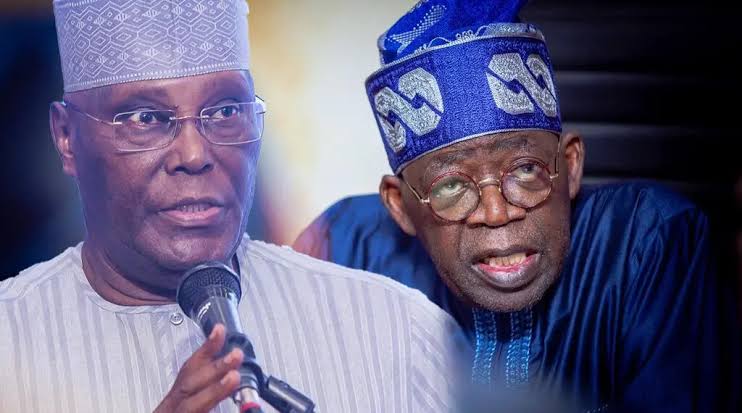
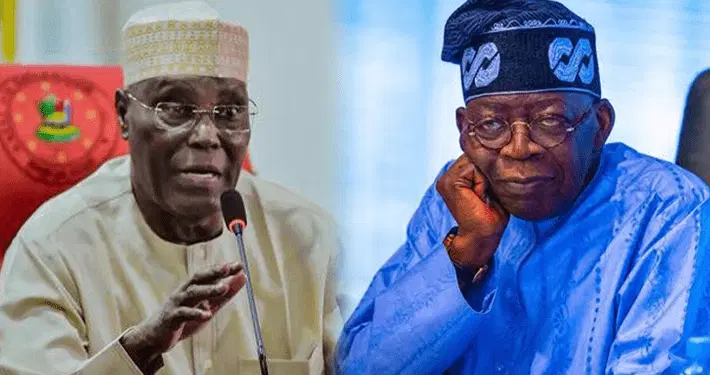
Presidential candidate of the African Democratic Congress (ADC) in the 2027 general election, Atiku Abubakar, has criticised President Bola Ahmed Tinubu’s economic reforms, accusing the administration of worsening hardship and failing to translate its policies into tangible benefits for ordinary Nigerians.
Atiku made the criticism in his Independence Day address on Thursday, October 1, 2026, in Abuja, hours after President Tinubu delivered his national broadcast to mark Nigeria’s 66th Independence Anniversary.
The former Vice President challenged the President’s declaration that Nigeria had moved beyond the emergency phase of its economic reforms and had entered an “age of prosperity,” arguing that economic growth figures and government assurances had yet to translate into improved living conditions for millions of Nigerians.
According to Atiku, Nigerians are still struggling to afford food, healthcare, education, transportation and other basic necessities, three years into the Tinubu administration.
He argued that the removal of the petrol subsidy in May 2023 triggered increases in fuel and transportation costs, as well as the cost of moving food and other goods across the country.
More Read
Atiku recalled that the government had promised that savings from the subsidy removal would be redirected towards programmes that would benefit Nigerians.
“Three years later, the pain has an address in every home. Bola, where is the benefit?” he asked.
The ADC candidate also challenged President Tinubu’s description of the reforms as having a “human face,” saying many Nigerians were yet to experience the promised benefits in their daily lives.
More Read
He said Nigerians were instead confronted with rising food prices, expensive healthcare, increasing school fees and electricity costs, while insecurity continued to threaten communities.
‘A Patient Who Cannot Afford to Live Is Not Proof the Treatment Is Working’
Atiku also took issue with the President’s comparison of Nigeria’s economic challenges to a patient suffering from cancer who requires painful treatment.
He questioned why, after three years of what the government describes as economic “treatment,” Nigerians were still struggling to afford basic necessities.
“You call Nigeria a patient with cancer. After three years of your treatment, why is it harder for Nigerians to buy food, pay for medicine or even get to work?” Atiku asked.
He argued that the success of economic reforms should ultimately be measured by their impact on citizens.
“A patient who cannot afford to live is not proof that the treatment is working,” he said.
Atiku further reminded the President that the All Progressives Congress (APC), which he said had governed Nigeria for eight years before Tinubu’s administration, also bore responsibility for the condition of the country.
Minimum Wage, Petrol and Food Prices
To illustrate his argument, Atiku compared the purchasing power of the minimum wage in 2023 with its value in 2026.
He said a ₦30,000 minimum wage in April 2023 could purchase approximately 118 litres of petrol, while the current ₦70,000 minimum wage could buy only about 50 litres.
He also cited increases in the prices of eggs and bread, saying the average price of an egg rose from about ₦88 in April 2023 to approximately ₦261 by May 2026.
According to him, a sliced loaf of bread that cost about ₦500 in April 2023 was selling for around ₦2,000 by May 2026.
“These may look like small items in a government report. In a family home, they are breakfast; they are the money left for a child’s lunch,” Atiku said.
Atiku Questions Nigeria’s Rising Debt
The ADC presidential candidate also raised concerns about Nigeria’s public debt.
He cited a public debt figure of ₦166.79 trillion as of June and questioned the government’s plans to secure additional borrowing from the World Bank.
Atiku called on the Federal Government to account for how previously borrowed funds had been spent before taking on additional debt.
He demanded greater transparency over projects financed with public borrowing, including details of project costs, beneficiaries and payments.
Questions Over ₦750bn Cash Transfers
Atiku also questioned the reported distribution of ₦75,000 cash transfers to more than 10 million Nigerians, which he estimated at about ₦750 billion.
He questioned how beneficiaries were identified and paid, particularly in areas affected by insecurity and where some beneficiaries reportedly did not have access to mobile phones.
The former Vice President called for an auditable account of the programme, including records showing how the beneficiaries were identified and how payments were made.
“Nigerians are not asking you to expose poor families. They are asking for an auditable account of how the money reached them,” he said.
Security and Rule of Law
Beyond the economy, Atiku raised concerns about insecurity and what he described as threats to political freedoms and due process.
He said Nigerians should be free to question their leaders, organise peacefully and demand political change.
He also referenced ongoing legal and political controversies involving Sheikh Sani Khalifa Zaria, former Kaduna State Governor Nasir El-Rufai and the case of Nnamdi Kanu, calling for due process and respect for lawful appeals.
Atiku further called for the release of five young Nigerians arrested in Borno over their alleged use of “Tinubu Must Go” T-shirts, while stressing that any allegations against them should be tested through due process.
2027 Election
Looking ahead to the 2027 general election, Atiku said Nigerians would have an opportunity to determine the direction of the country.
He promised that, if elected, his administration would prioritise affordability, security, healthcare, education and transparency in public spending.
He also pledged to strengthen the independence of the Independent National Electoral Commission (INEC) and take action against electoral offences, including vote buying and manipulation of election results.
Atiku said his proposed administration would focus on reducing the cost of food, fuel and electricity while improving access to healthcare and education.
His address offered a sharply contrasting assessment of the country’s economic situation to President Tinubu’s Independence Day message, in which the President said economic indicators showed that Nigeria’s reforms were beginning to produce improved prospects and that the country was moving into a period of broader prosperity.
The contrasting positions set the stage for a more intense political debate over the direction of Nigeria’s economy and governance ahead of the 2027 general election.