Tehran says normal shipping could resume within a week if Washington accepts its conditions, while diplomatic discussions continue and uncertainty remains over the future of the conflict.
NEW YORK — Iran has proposed a deal to the United States that could see the strategically important Strait of Hormuz reopened within seven days, as diplomatic efforts intensify to end the ongoing conflict between the two countries.
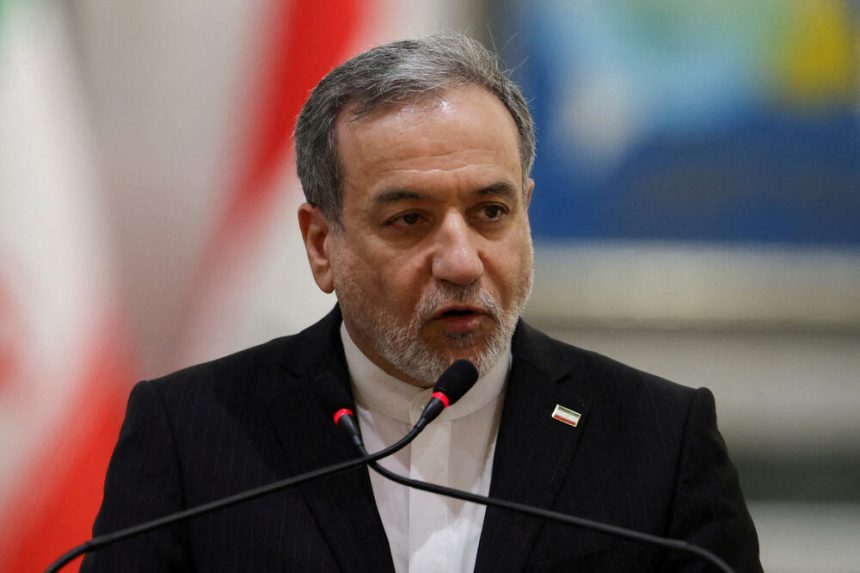
Iranian Foreign Minister Abbas Araghchi announced the proposal while speaking to reporters on the sidelines of the United Nations General Assembly in New York. He said the offer had been delivered to Washington through Qatar and that the necessary conditions for reopening the waterway were already contained in a memorandum of understanding (MOU) signed in June.
According to Araghchi, Iran is prepared to restore normal maritime passage within seven days if the United States agrees to the terms.
“The choice now rests with the United States,” he said, adding that Tehran was ready to move forward if Washington demonstrated a genuine commitment to reaching an agreement.
The proposal comes amid continued military confrontations, disruptions to international shipping and growing pressure on global energy markets.

A US official told the BBC that positive discussions were taking place through mediators, including on nuclear-related issues. However, Washington had not formally responded to Iran’s latest proposal at the time of the report.
The Wall Street Journal reported that US President Donald Trump had rejected the offer and was privately sceptical that Tehran would meet his demands. The newspaper also reported that Trump had told aides he considered renewed military strikes against Iran likely.
Despite the reported rejection, diplomatic channels remain active, with Qatar playing a role in relaying communications between the two sides.
A US official, meanwhile, said Washington believed it was in a strong position regarding control of the Strait of Hormuz and was therefore under no immediate pressure to reach an agreement.
The conflicting reports underscore the uncertainty surrounding the negotiations, with neither side having publicly confirmed a final agreement on the proposed terms.
Araghchi did not publicly detail every condition attached to the new proposal. However, he said the requirements were already contained in the June MOU, which was intended to establish a ceasefire and partially restore shipping through the Strait of Hormuz.
The 14-point framework included commitments concerning Iran’s nuclear programme, the cessation of military operations on all fronts, the lifting of the US naval blockade and sanctions relief.
It also called for Iran to make its best efforts to ensure the safe passage of commercial vessels through the strait and for discussions with Oman on future shipping arrangements.
The agreement, signed on June 18, was intended to create a pathway towards a broader settlement. However, it subsequently collapsed after military operations resumed.
Iranian officials have described the latest proposal as an opportunity to revive that framework and move towards a lasting agreement.
The seven-day timetable would begin once the United States accepts the proposal, according to Araghchi’s remarks.
Iranian President Masoud Pezeshkian has also indicated that Tehran is prepared to resume discussions on its nuclear programme as part of a possible settlement.
In an interview with CBS News, Pezeshkian said the ceasefire process could begin as soon as the United States accepted Iran’s proposal. He maintained that the two countries had previously reached an understanding through the June memorandum.
The Iranian president also said his government would allow United Nations nuclear inspectors into the country, provided an agreement could be reached on the terms of the inspections.
Rejecting accusations that Iran was seeking to develop nuclear weapons, Pezeshkian said negotiations could produce arrangements allowing inspections on the specific issue.
Iran’s willingness to discuss inspections is a significant part of the diplomatic picture, given that its nuclear programme has been one of the central points of disagreement between Tehran and Washington.
However, it remains unclear whether the two countries can agree on the scope, timing and verification procedures for any renewed inspection arrangement.
The proposal comes against the backdrop of a major regional conflict that has severely disrupted shipping through the Strait of Hormuz, a vital maritime corridor connecting the Persian Gulf with the Gulf of Oman and the wider Indian Ocean.
The United States and Israel launched air strikes against Iran on February 28, prompting Tehran to retaliate with attacks on Israel, US military bases in the Gulf and other regional targets. Iran also blocked the Strait of Hormuz, sharply reducing the movement of commercial vessels.
Before the conflict, approximately 20 per cent of the world’s oil and liquefied natural gas passed through the strait. Its closure has contributed to significant volatility in international energy prices and raised concerns about the security of global supply chains.
Shipping data cited by Reuters showed that the recent 10-day average for vessel transits through the waterway stood at approximately 18 per day, with daily traffic falling to as few as nine vessels on some days.
The disruption has increased pressure on governments and energy markets to find a diplomatic solution that would restore safe passage through the waterway.
The conflict has also expanded beyond the immediate confrontation between Iran, the United States and Israel, with Iran-aligned Houthi forces in Yemen reportedly intensifying attacks affecting regional maritime and energy infrastructure.
The Houthis have been involved in a series of operations targeting shipping and strategic locations around the Red Sea. Their activities have raised concerns about another critical maritime chokepoint, the Bab al-Mandab Strait, which connects the Red Sea to the Gulf of Aden.
Reports have also highlighted attacks on Saudi oil infrastructure and concerns over the security of alternative routes for transporting energy exports.
These developments have added another layer of complexity to efforts to stabilize the region, particularly as disruptions to the Strait of Hormuz have already constrained international energy transportation.
Saudi Arabia’s security concerns have reportedly prompted Crown Prince Mohammed bin Salman to seek military support from Washington, although the reported request has not established that additional US forces will be deployed.
Addressing the United Nations General Assembly earlier this week, President Trump expressed confidence that a deal with Iran could eventually be reached, but also issued a stark warning about the consequences of continued confrontation.
Trump suggested that an agreement could emerge after the November US congressional elections, although he also raised the possibility of further military action if negotiations failed.
His remarks came as the economic effects of the conflict, particularly energy price fluctuations, continued to attract attention in the United States.
The approaching midterm elections have added a domestic political dimension to the diplomatic challenge, although the precise impact of the conflict on voters and the administration’s negotiating strategy remains uncertain.
Iran, for its part, has rejected what it describes as coercion and intimidation. Araghchi said that peace could not be built through threats of annihilation and insisted that Tehran would not accept negotiations conducted under military pressure.

The latest Iranian proposal presents a possible opening for renewed negotiations, but significant obstacles remain.
The June MOU previously offered a framework for ending hostilities, addressing nuclear concerns and restoring maritime traffic. Its collapse, however, demonstrated the difficulties of sustaining a ceasefire amid deep mistrust and unresolved disagreements.
The latest offer also leaves important questions unanswered, including the precise steps Washington must take, how compliance would be verified and what arrangements would govern commercial shipping once the strait reopens.
For now, the proposal remains conditional, and the United States has yet to publicly confirm acceptance of Iran’s terms.
Whether the latest diplomatic initiative can produce a lasting ceasefire and restore safe passage through the Strait of Hormuz will depend on the willingness of both governments to reach agreement on the outstanding issues.
As international attention remains fixed on the Middle East, the next move from Washington could prove crucial in determining whether the region moves towards renewed diplomacy or further military escalation.