Germany’s far-right Alternative for Germany (AfD) has secured a dramatic victory in the eastern state of Saxony-Anhalt, recording its strongest-ever performance in a state election and finishing far ahead of the ruling conservative CDU.
With most votes counted, the AfD was projected to win around 44% of the vote, more than twice its 2021 result and well ahead of the CDU, which stood at about 17%.
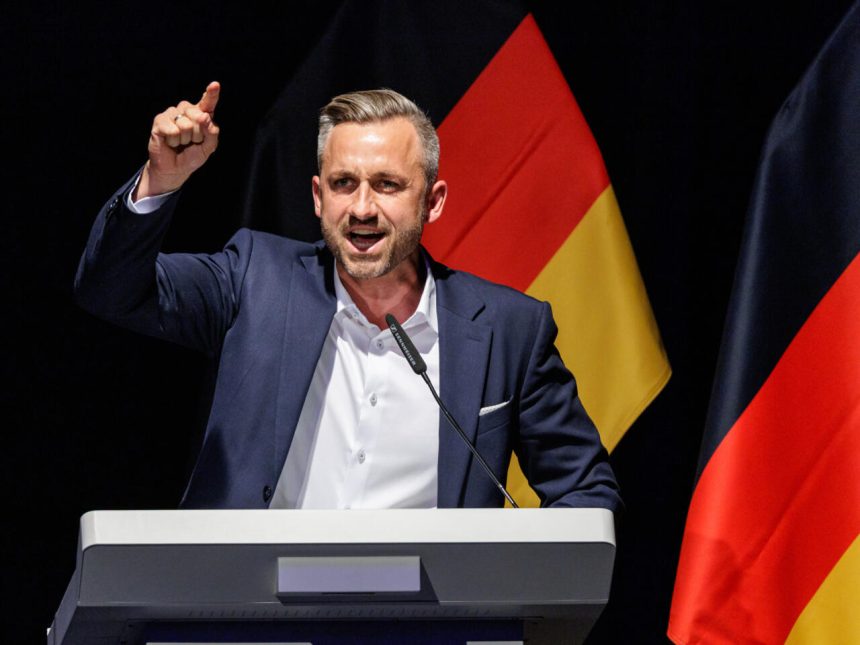
Although the AfD fell short of the majority required to form a government on its own, the party’s state leader, Ulrich Siegmund, declared that voters had given it a clear mandate to govern.
“This is sensational,” Siegmund told jubilant supporters, saying the party wanted to begin governing as soon as possible.
More Read

The result marks a potentially historic turning point in Germany. No far-right party has governed a German state since the end of World War Two.
The AfD’s victory could give the party influence over important areas of state government, including policing, education and culture.
Saxony-Anhalt, home to about 2.1 million people, is one of the AfD’s strongest bases in eastern Germany. The state branch has been classified as “right-wing extremist” by Germany’s domestic intelligence service, a designation Siegmund and the party reject.
More Read

AfD Celebrates ‘Historic’ Result
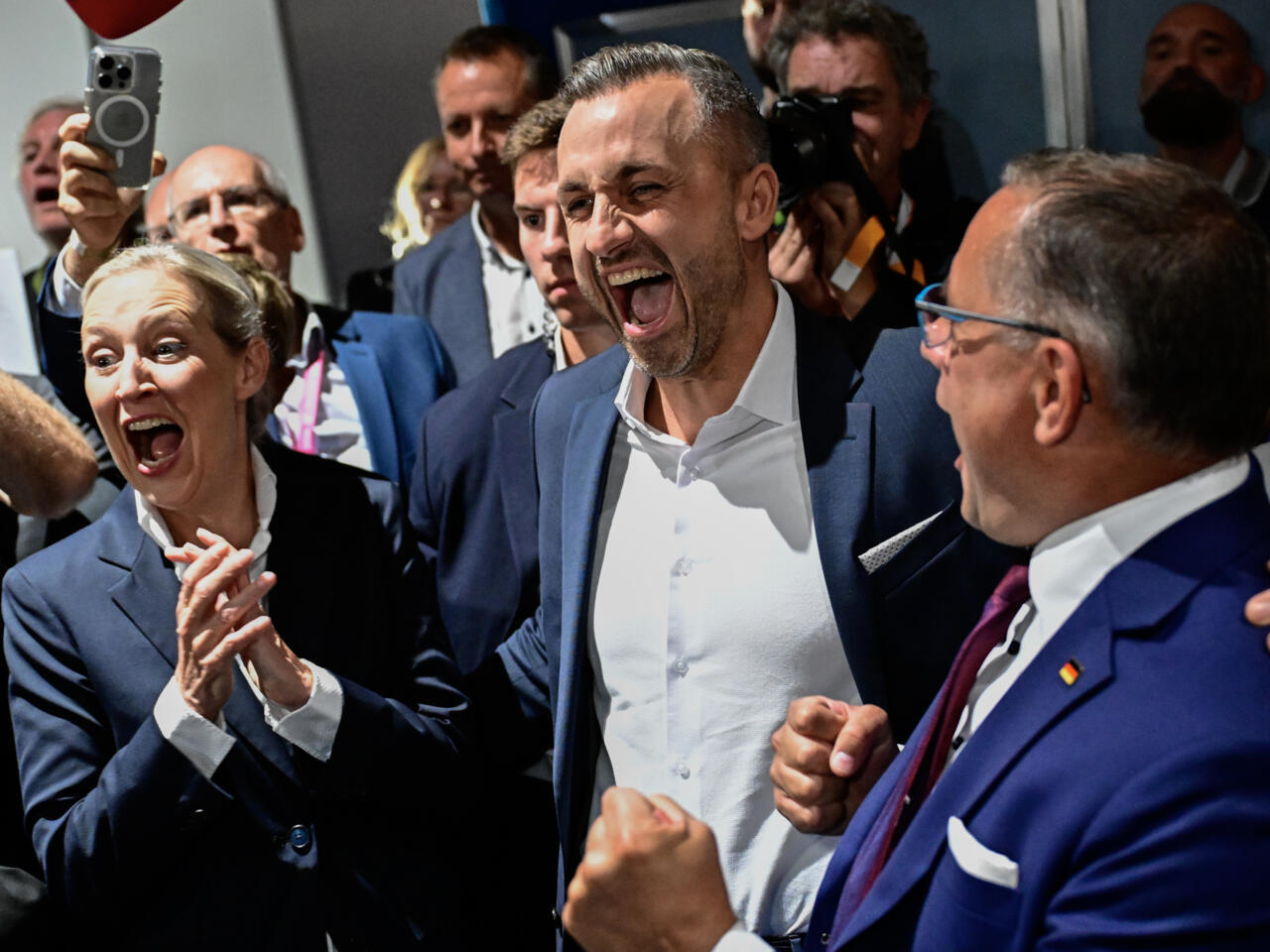
Siegmund, 35, celebrated the result alongside AfD national co-leaders Alice Weidel and Tino Chrupalla as exit polls showed the party heading for a commanding victory.
“We have made history in this state,” Siegmund told supporters at the party’s election-night headquarters.
The atmosphere among AfD supporters was jubilant, with crowds cheering as projections appeared on screens. Shortly afterwards, supporters began singing Germany’s national anthem.
Siegmund insisted that the result had significance far beyond Saxony-Anhalt.
“This isn’t just about Saxony-Anhalt,” he said. “It’s a signal for the whole of Germany – a self-confident signal.”
The AfD was heading for approximately 39 seats in the 83-member state parliament, leaving it three seats short of the 42 required for an outright majority.
More Read

Despite this, Siegmund has so far rejected the idea of leading a minority government.
“If necessary there’ll just be new elections, then we’d just get 50 or 55%,” he said, while indicating that he would be willing to work with individual lawmakers or another political party.
CDU Suffers Major Setback
The result represented a severe blow for the CDU, whose vote share fell by more than half compared with the previous election.
CDU state leader Sven Schulze conceded defeat.
“This was an extremely tough and intensive election campaign,” Schulze said, adding that his party would have to confront the implications of the result.
Germany’s centre-left Social Democratic Party (SPD) also described the outcome as “truly dramatic”.
SPD national leader Lars Klingbeil, whose party governs Germany nationally alongside the CDU, described the result as a “signal to Berlin”.
The AfD’s breakthrough also dominated national television coverage, with broadcaster Das Erste cancelling its long-running crime drama Tatort to focus on the election and its wider implications for German politics.
Coalition Options Remain Limited
The AfD faces a major obstacle to translating its electoral victory into government power.
Germany’s mainstream parties have maintained a political “firewall”, known as the Brandmauer, refusing to enter coalition governments with the AfD.
That leaves the party with few options for forming a stable administration.
The situation was further complicated by the performance of the Sahra Wagenknecht Alliance (BSW). For several hours, it remained uncertain whether the party would cross the five-percent threshold required to enter the state parliament. Interim results eventually indicated that it had succeeded.
Had the BSW failed to enter parliament, the AfD would have had a significantly easier path towards securing a majority.
The BSW has nevertheless indicated that it could cooperate with the AfD on selected issues.
Trump and Russia React to AfD Victory
The result also attracted international attention.
US President Donald Trump shared a screenshot of German television projections showing the AfD ahead on his Truth Social platform.
Russian presidential envoy Kirill Dmitriev subsequently reposted a screenshot of Trump’s post and described the result as a “historic win for the pragmatic AfD”.
Dmitriev has previously praised the Russia-friendly party, describing it as a party of “hope and reason” for Germany.
The AfD has faced criticism over its positions on Russia and the war in Ukraine.
In the run-up to Germany’s federal election last year, US Vice-President JD Vance also endorsed the party, prompting accusations in Germany of foreign political interference.
Polish Prime Minister Donald Tusk, however, offered a starkly different reaction.
“In Poland only idiots and traitors can rejoice at the triumph of the AfD,” Tusk said.
Migration at the Heart of AfD Campaign
Migration and security were among the central themes of the AfD’s campaign.
The party has advocated a controversial policy known as “remigration”, a term that has generated intense debate in Germany.
The AfD says the policy primarily concerns the deportation of criminals and people who are living in Germany illegally. Critics, however, argue that the term has much broader implications and could involve mass deportations of migrants.
Even if the AfD were to enter government in Saxony-Anhalt, its ability to implement such a policy would be limited because migration and deportation are largely governed at the federal level.
Nevertheless, a state government led or heavily influenced by the AfD could exercise significant powers in areas such as policing, education and culture.
Battle Over Germany’s History
Culture has also emerged as an important battleground.
The AfD has been particularly critical of the Bauhaus school of design, which was founded in Weimar before moving to Dessau in Saxony-Anhalt. The Nazis shut down the Bauhaus after coming to power in 1933.
The AfD has described Bauhaus as “the dead-end of modernism”, language that critics say echoes aspects of the Nazi-era hostility towards modern art and culture.
The party’s rise has therefore revived a wider debate about Germany’s history and the country’s determination to prevent the return of extremist politics.
At a “Democracy Festival” held in Magdeburg on the eve of the election, anti-AfD demonstrators warned against allowing Germany to repeat the mistakes of its past.
One demonstrator, Nikita, said Germans needed to “learn from our history and not go back”.
“We don’t want the dark times any more,” she said.
Jewish Leader Warns of a Dangerous Turning Point
The election result also prompted an emotional response from Charlotte Knobloch, the veteran head of the Jewish community in Munich and Bavaria and a Holocaust survivor.
Knobloch said the AfD’s success frightened her and urged Germany’s mainstream political parties not to allow the country’s political centre to weaken.
“On days like this I find it hard to recognise my homeland any more,” the 93-year-old said.
She appealed to mainstream parties to act against what she described as the country’s political “decline”.
‘Things Need to Improve’ — AfD Supporters
Despite the criticism, AfD supporters in Saxony-Anhalt said the result reflected growing frustration with established political parties.
One supporter, identified as Ollie, praised Siegmund’s leadership.
“This man gives us what no-one else can give,” he said.
“No matter what government, they all just promise things to get better. This is a party for the working people. It is the alternative for Germany.”
Another supporter, Bert, said voters in eastern Germany were increasingly worried about security and their families’ future.
“Things need to improve for us, for my family – I have three children,” he said. “I’m in fear, I’m really in fear that safety erodes more and more.”
Turnout in Saxony-Anhalt reached a particularly high 76.7%, underlining the significance of the election.

A Warning for Berlin
The AfD’s victory in Saxony-Anhalt comes as the party continues to perform strongly in national opinion polls, with its strongest support concentrated in Germany’s eastern states.
The party also won the 2024 state election in neighbouring Thuringia but was unable to secure enough seats to govern.
Saxony-Anhalt could therefore become the latest test of whether the AfD can turn electoral dominance into actual political power.
For now, the party has won the numbers but not the majority.
The decisive question is whether Germany’s political firewall will hold — or whether the AfD’s unprecedented success will eventually force its mainstream rivals to reconsider their refusal to cooperate with it.
For Siegmund and his supporters, however, the message from voters is already clear.
The AfD believes it is no longer simply an opposition force.
It believes it is on the march towards power.