She wrote it as a goodbye to a man who helped launch her career. Elvis Presley wanted it. Whitney Houston transformed it. And Dolly Parton’s decision to keep her publishing rights changed everything.
By Cruise TV News Editorial Desk
How productive was your day?
Perhaps you should consider Dolly Parton—and think again.
In one remarkable burst of creativity in 1973, the legendary country singer-songwriter reportedly sat down and wrote two songs that would become enduring classics: “Jolene” and “I Will Always Love You.”
One became synonymous with Dolly Parton. The other would eventually become one of the biggest songs in popular music history after Whitney Houston transformed it into a breathtaking power ballad nearly two decades later.
More Read

But behind the song is a story of ambition, heartbreak, loyalty, business instincts and one of the most consequential decisions a songwriter can make: knowing when not to give away the rights to your work.

It Was Never Really a Love Song
When Dolly Parton wrote “I Will Always Love You” in 1973, she was not thinking about Whitney Houston, Hollywood blockbusters or millions of dollars.
She was thinking about leaving.
After moving from Tennessee to Nashville in the 1960s, Parton had worked hard to establish herself as a singer and songwriter. Her career received a major boost when country star Porter Wagoner invited her to join his television show.
The partnership was hugely successful.
But success came with a complication.
Parton wanted more.
She had arrived in Nashville determined to become a star in her own right, and by 1973 she knew she could no longer remain simply “the girl singer” beside Wagoner.
The decision to leave was emotionally difficult.
Wagoner had played a crucial role in her career, and Parton wanted him to understand that walking away was not an act of hatred or ingratitude.
So she did what she knew best.
She wrote a song.
“I Will Always Love You” became her musical goodbye—a tender acknowledgement of everything Wagoner had done for her, combined with the determination of a woman who had decided to follow her own destiny.
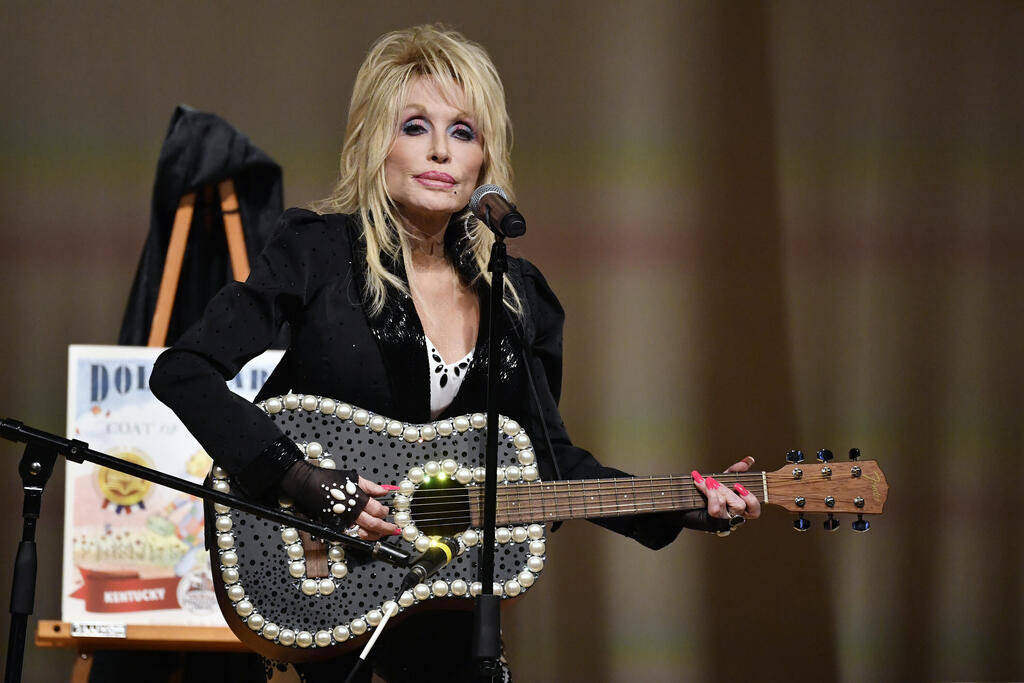
Parton later recalled singing the song to Wagoner in his office, accompanied only by her guitar.
He reportedly cried.
Then came his response: it was the best song she had ever written.
The song gave Parton a way to say what ordinary conversation could not.
She was leaving—but she wasn’t forgetting.
Two Classics, One Extraordinary Day
The circumstances surrounding the song become even more remarkable when paired with another Dolly Parton classic.
Around the same creative period, Parton wrote “Jolene.”
Imagine producing two songs that would eventually become cultural institutions within the same burst of songwriting inspiration.
For most songwriters, either one could represent a career achievement.
For Dolly Parton, they were simply songs born from a moment in her life.
“I Will Always Love You” would soon become a major country hit, but its journey was only beginning.
Then came a phone call that could have changed the ownership—and perhaps the entire financial history—of the song.
Then Elvis Presley Came Calling
Elvis Presley had heard “I Will Always Love You” and wanted to record it.
For an aspiring songwriter, this was almost unimaginable.
The King of Rock and Roll wanted to sing her song.
Parton was thrilled.
But the excitement didn’t last.
Before Presley could record it, his manager, Colonel Tom Parker, reportedly demanded that Parton surrender a substantial portion of the song’s publishing rights.
The demand was devastating.
Parton was faced with an extraordinary choice.
She could have the prestige of Elvis Presley recording her song—or she could keep ownership.
She chose ownership.
It wasn’t an easy decision.
Parton has recalled that she cried over the situation.
But she ultimately refused to give away half of her publishing rights.
That decision would later prove to be worth an extraordinary amount of money.
Hollywood Came Knocking
Years passed.
The song continued to live.
Parton recorded it herself. She later performed another version in the 1982 film “The Best Little Whorehouse in Texas,” where it once again demonstrated its remarkable ability to connect with audiences.
But the song still had another transformation ahead.
In the early 1990s, Hollywood was preparing “The Bodyguard,” a romantic thriller starring Kevin Costner and Whitney Houston.
Costner, who played a former Secret Service agent protecting Houston’s character, reportedly suggested that Houston perform a country song.
Among the possibilities was Dolly Parton’s composition.
There was initially some scepticism.
Could a country farewell ballad work as the centerpiece of a major Hollywood soundtrack?
The answer arrived when producer David Foster reimagined the song for Houston.
The country arrangement was transformed.
The intimacy remained—but everything around it became bigger.
Much bigger.
Whitney Houston Changes Everything
Houston’s version began almost quietly.
Her voice entered with extraordinary restraint.
Then the song gradually expanded until the emotional pressure became almost unbearable.
By the time Houston reached the climactic sections, “I Will Always Love You” had ceased to sound like a simple country farewell.
It had become an anthem.
A love song.
A breakup song.
A wedding song.
A funeral song.
A declaration of devotion.
A song about letting go.
And, ultimately, a song that seemed capable of meaning something different to almost everyone who heard it.
Houston herself reportedly respected Parton deeply as both a songwriter and performer.
Parton, meanwhile, was overwhelmed when she first heard Houston’s recording.
The transformation was so powerful that she recalled being so distracted while driving that she had to pull over.
She couldn’t believe that the song she had once written with nothing more than her guitar could sound so enormous.
The Whitney Effect
When “The Bodyguard” arrived in 1992, the song exploded.
Whitney Houston’s version became a worldwide phenomenon.
It spent weeks at the top of charts, became one of the defining songs of the 1990s and eventually earned Houston a Grammy Award.
The song sold millions of copies around the world.
But there was another winner.
Dolly Parton.
Because she had retained her songwriting and publishing rights, every major commercial use of the composition could generate income for her.
Reports have estimated that Houston’s version alone earned Parton more than $10 million in royalties during the 1990s.
The woman who had once cried because she refused to surrender half of the song’s rights was now reaping the rewards of that decision.
The Elvis deal that never happened suddenly looked very different.
Dolly Didn’t Just Spend the Money on Herself
Perhaps one of the most touching chapters of the story came years later.
After Whitney Houston died in 2012 at the age of 48, Parton revealed that she had used some of the money generated by the song to invest in property in a predominantly Black neighbourhood in Nashville.
She explained that she saw the investment as a tribute to Houston.
It was a deeply personal gesture.
The royalties had come from a song written decades earlier, transformed by a singer who had become one of the greatest voices of her generation.
Parton turned some of that success into something tangible in a community.
The Song That Keeps Finding New Lives
More than five decades after Dolly Parton first wrote “I Will Always Love You,” the song continues to find new audiences.
Its story has become larger than any one performer.
Dolly Parton’s original remains cherished by country-music audiences.
Whitney Houston’s version remains one of the most recognizable vocal performances in modern music.
The song has appeared in films, television programmes, weddings, talent competitions, concerts and countless personal moments.
It has also become so deeply embedded in popular culture that audiences sometimes instinctively sing along whenever it begins.
Sometimes, that enthusiasm has even caused problems.
But perhaps that is the ultimate proof of its cultural power.
People don’t simply hear “I Will Always Love You.”
They feel it.
The Business Lesson Behind the Ballad
There is a powerful lesson hidden beneath all the romance.
Dolly Parton’s story is not simply about songwriting.
It is about ownership.
She created something valuable and, when given the opportunity to surrender part of it, she refused.
That decision required courage.
At the time, Elvis Presley recording her song would have been an extraordinary career opportunity. Saying no must have felt almost impossible.
Yet Parton understood something that many creative people learn too late:
Your talent creates the work, but ownership determines who benefits from its success.
Had she surrendered the rights, the financial history of “I Will Always Love You” could have been dramatically different.
Instead, she retained control.
And when Whitney Houston turned the composition into a global phenomenon nearly 20 years later, the songwriter was still standing beside her creation as its rightful beneficiary.
From Goodbye to Immortality
There is a beautiful irony in the story of “I Will Always Love You.”
Dolly Parton wrote it because she was saying goodbye.
She wanted to leave Porter Wagoner’s show.
She wanted to move forward.
She wanted to become her own star.
But instead of ending something, the song began a journey that would last generations.
It travelled from a Nashville office to country-radio stations.
From Dolly’s guitar to Hollywood.
From Whitney Houston’s voice to millions of homes around the world.
From heartbreak to weddings.
From a difficult professional goodbye to one of the most enduring songs ever recorded.
And somewhere in the middle of it all was a decision that could have gone another way.
Elvis wanted the song.
Dolly said no.
Whitney later sang it.
And history changed.
Perhaps that is the greatest lesson of Dolly Parton’s extraordinary songwriting story:
Sometimes the “no” that breaks your heart today is the same “no” that makes your future possible.
Fifty years on, Dolly Parton’s farewell has become anything but a goodbye.
It is a song that refuses to leave.
And yes—Dolly Parton will always love it.