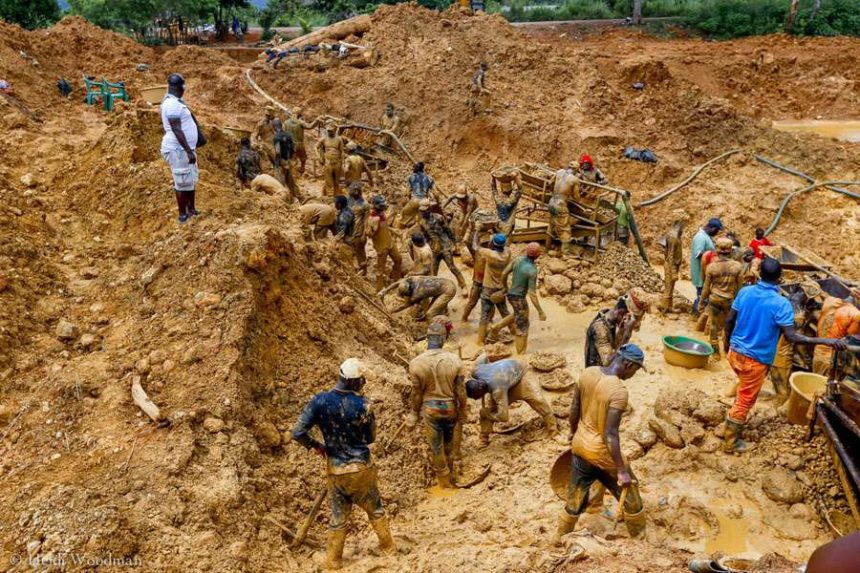
From banditry and environmental destruction to deadly mining accidents and toxic exposure, illegal mining is raising concerns across the country, with experts warning of long-term consequences for children and surrounding communities.
Nigeria’s illegal mining crisis is assuming an increasingly worrying dimension, with security agencies, government officials and community leaders warning that the illicit exploitation of the country’s mineral resources is threatening national security, destroying the environment and putting lives at risk.
Across several states in the North-West, North-Central and southern regions, unauthorized mining has been linked to insecurity, land degradation, water pollution, abandoned mining pits and deadly accidents. In some communities, the activities have also been associated with banditry, kidnapping, displacement and conflicts over access to mineral resources.
Beyond the immediate security and environmental challenges, health experts are raising the alarm over the dangers posed to children living and working around mining sites, warning that prolonged exposure to toxic substances could result in brain damage, respiratory illnesses, developmental problems and reproductive health complications.
The growing concerns have prompted the Federal Government to intensify enforcement operations, prosecute alleged offenders and pursue measures to formalize artisanal mining. However, questions remain over the effectiveness of these interventions and the ability of authorities to prevent illegal operators from relocating to other areas.
Government intensifies crackdown
The Nigeria Security and Civil Defence Corps (NSCDC), which oversees the Mining Marshals, has described illegal mining as a major national security threat, stressing the need for intelligence-driven operations and coordinated enforcement.
The concern has also reached the National Assembly, where the House of Representatives Committee on Mineral Exploitation, Security and Anti-Money Laundering described illegal mining as a “sophisticated national threat” with serious implications for national security, revenue generation, environmental sustainability and governance.
The Mining Marshals have been deployed across the country to identify and shut down illegal mining sites, arrest suspects and protect licensed mining areas.
In a recent disclosure, Minister of Solid Minerals Development, Dele Alake, said the Mining Marshals had identified 374 illegal mining sites, cleared 108, arrested 743 suspects and prosecuted 165 cases involving 430 accused persons. He added that five convictions had been secured.
In May 2026, Alake also disclosed that more than 327 people, including foreign nationals, had been apprehended for illegal mining. Some cases involving suspected links to terrorism were reportedly referred to the Office of the National Security Adviser for further investigation.
The Federal Government has also revoked about 3,000 mining licences as part of efforts to sanitise the sector.
However, enforcement agencies face a complex network of operators that extends beyond miners working with shovels and pickaxes. Investigations have identified a chain involving labourers, mineral buyers, middlemen, financiers, processors and, in some cases, foreign nationals.
Chinese nationals have featured in several recent enforcement operations. In May 2026, 15 Chinese nationals and nine Nigerians were arraigned before the Federal High Court in Abuja over alleged illegal lithium mining in Kokona Local Government Area of Nasarawa State.
In September, four Chinese nationals were arrested in Maiya’aki, Lapai Local Government Area of Niger State, over alleged unauthorised mining at a site where they reportedly lacked valid licences.
An earlier court filing by the Economic and Financial Crimes Commission also alleged that Chinese and Nigerian nationals were involved in the illegal extraction and trading of mica and lithium, with some minerals reportedly transported to Ogun State for processing and export through Lagos.
Mining and insecurity across the states
The scale and nature of illegal mining differ across Nigeria, with several states facing distinct challenges ranging from armed violence and deadly accidents to pollution and the destruction of agricultural land.
In Zamfara State, illegal gold mining remains a major concern in areas including Maru, Anka, Bukkuyum, Talata Mafara and Zurmi. Although many rural residents depend on artisanal mining for their livelihoods, concerns have intensified where unregulated operations overlap with armed groups and weak state control.
An attack in Gobirawar Chali, Maru Local Government Area, in April 2025 reportedly killed at least 19 people, while Amnesty International said more than 20 people died. There have also been allegations that a terror kingpin demanded protection levies from gold miners in Zurmi, although the claims could not be independently verified.
Mining accidents have added to the state’s challenges. In September 2025, a mining pit collapsed in Kadauri, Maru, with casualties reported, although the exact number was not immediately established.
In Niger State, illegal and unauthorised mining has been reported in several local government areas, including Lapai, Katcha, Kontagora, Mariga, Shiroro, Rafi and Paikoro. Gold is among the major minerals being extracted, alongside a range of other valuable deposits.
The state attracted national attention in September 2026 after 37 suspected illegal miners died while in NSCDC custody. The circumstances surrounding the deaths are under investigation, with the Federal Government constituting an independent 10-member committee to probe the incident.
Plateau State has also experienced a succession of mining-related disasters, attacks and deaths. Mining activities are concentrated in areas including Barkin Ladi, Jos South, Bassa, Riyom, Wase, Bokkos and Mangu.
Among the reported incidents were the deaths of 13 people following a mining-site collapse in November 2024, four deaths in another collapse in Dura in September 2025, and at least 37 fatalities following toxic gas exposure at a mining site in Kampanin Zurak, Wase, in February 2026.
Further incidents included the deaths of five people at Gero Village, Gyel, in June 2026, three people at Nyango-Gyere later that month, seven people in a mining-pit collapse in Kassa in August and two people in another incident in Gangare on September 23. The reported death toll from the incidents outlined in the report amounts to 90.
In response, Governor Caleb Mutfwang issued Executive Order 001 in February 2025, suspending mining activities across 17 local government areas. The state government later announced that 159 operators had been cleared to operate under various categories, including mining licences, exploration licences, small-scale mining leases and artisanal mining permits.
Despite the measures, monitoring remains difficult because mining sites are remote and scattered, with reports of some operators working at night.
Illegal mining raises concerns in other states
In Kogi State, illegal mining has become a major concern for the government and affected communities, particularly where mining activities have reportedly damaged farmland, roads and water sources.
In September 2026, Alake said the Mining Marshals had dislodged illegal miners operating in a licensed area in Yagba East Local Government Area. He alleged that some local elders, traditional rulers and local government functionaries had supported illegal operations.
Concerned Kogi Youths Against Environmental Degradation had earlier protested against the environmental impact of mining in areas including Ankpa and Omala.
Nasarawa State has emerged as an important lithium-mining frontier, attracting local and foreign operators. Apart from the prosecution of alleged illegal miners, authorities have intensified monitoring to ensure that mining activities remain within approved licensed coordinates. Concerns have also been raised about worker safety and possible child labour.
In Taraba State, the government has repeatedly suspended mining activities amid concerns about unauthorised operations in forest reserves and rural communities. The affected areas include parts of Bali, Sardauna, Takum, Ardo-Kola and Gassol.
Governor Agbu Kefas has issued three executive orders suspending mining activities since 2023, including another suspension in June 2026. A Premium Times investigation estimated that illegal mining could cost the state more than N10 billion annually.
On September 18, 2026, five alleged illegal miners died following a mining-pit collapse in Mayokam, Bali Local Government Area. A subsequent task force operation dispersed miners and seized equipment.
In Ebonyi State, abandoned mining pits, unsafe operations and alleged environmental violations have raised concerns in communities including Abakaliki, Ikwo, Izzi, Ezza South and Ishielu.
The state government has inaugurated a Solid Minerals Task Force to seal illegal sites, confiscate equipment and curb night-time rock crushing and the movement of mineral-laden trucks.
Commissioner for Solid Minerals, Mt Magnus Nkah, has warned operators to comply with safety requirements, stressing that companies must also meet their obligations to workers and host communities.
The dangers of abandoned pits have already resulted in fatalities. Community youth leader Ogochukwu Elem said one abandoned pit had remained open for about 10 years following an earlier incident.
At Okposi Umuoghara, a truck driver and his assistant reportedly died after falling into a mining pit. A motorcycle operator and a cyclist also died in the area, bringing the reported fatalities associated with the incidents to at least five.
Other states facing illegal mining concerns include Bauchi, Kaduna, Kebbi, Adamawa, Benue, Osun, Oyo, Ogun, Edo and Kwara.
In Bauchi, Governor Bala Mohammed identified illegal mining in Alkaleri and neighbouring border communities as a major contributor to insecurity and banditry in August 2026, warning influential individuals allegedly involved in the activities that they could face prosecution.
In Kaduna, a 2024 study identified 103 mining sites across 36 communities in four local government areas, including 53 active and 50 abandoned sites. The study identified Jema’a and Birnin Gwari as major mining areas, with gold, tin, tantalum and other minerals being extracted.
In Kebbi, Mining Marshals, supported by security agencies, dislodged thousands of people from mining areas under the Presidential Artisanal Gold Mining Development Initiative in Yauri Local Government Area in February 2026.
In Adamawa, Governor Ahmadu Fintiri ordered an immediate ban on illegal mining in Lamurde in June 2026 following a preliminary report on a crisis in the area.
Benue has experienced mining activities alongside attacks and displacement, particularly in Kwande and Logo local government areas. The Turan Development Association suspended mining activities in May, citing insecurity, environmental degradation and alleged exploitation.
In Kwara, illegal mining has been reported in Kaiama and Bani, where gold and lithium have attracted operators. The expansion of unauthorised activities has raised concerns about environmental degradation, revenue losses and the difficulty of monitoring remote sites.
Osun communities face environmental threats
Osun State has become another major focus of concern, with illegal gold mining reportedly disrupting livelihoods, damaging agricultural land and creating environmental hazards.
The problem is particularly pronounced in Osun-East Senatorial District, including Ifeland and Ijesaland, although the environmental impact has also raised concerns in Osogbo, Asejire and around the Osun River.
Communities including Ibodi, Ijanna Wasare, Itagunmodi, Ayegunle, Iwara, Igangan, Kajola, Iponda and Ilase have reportedly experienced mining activities. Some farmers have abandoned their land, while residents living near mining sites have reportedly left their homes.
There have also been allegations that influential individuals and officials supported unauthorised operations, including through a ticketing system allegedly used to shield miners from enforcement.
During a visit to Ibodi by Sunday Vanguard alongside federal ministry officials and four local government chairmen, security personnel were allegedly seen providing cover for miners and preventing enforcement officers from making arrests. The confrontation reportedly escalated into a standoff, with military and police personnel raising weapons against one another.
At Ijanna Wasare, NSCDC personnel were also allegedly accused of alerting miners and helping some escape arrest.
Environmental concerns have extended to the Osun-Osogbo River, which reportedly serves more than 20 communities. Urban Alert has called for urgent intervention by the federal and state governments, as well as international partners, over suspected pollution linked to mining.
The organisation said the river stretches about 213 kilometres from Ekiti through Osun, Oyo and Ogun to Lagos, with five dams and approximately two million people depending on it.
Urban Alert reported that testing had detected substances including cyanide, mercury and lead, raising concerns about potential health risks.
Chairman of Ilesa West Local Government Area, Lanre Balogun, said many mining sites had no records with the Federal Ministry of Solid Minerals Development and were operating without licences.
He also alleged that unknown individuals were collecting revenue through ticketing, rather than allowing the relevant authorities to regulate the activities.
In Oyo State, illegal mining has been reported in Oke-Ogun, Iwajowa, Iseyin, Itesiwaju, Atisbo, Kajola and Irepo, among other areas. The state has deposits of gold, gemstones, marble, tantalite and several other minerals.
In January 2026, the state government suspended the Sobaloju of Ofiki, Atisbo Local Government Area, over allegations that he issued unauthorised consent letters to mining companies and permitted activities in a government reserve.
Ogun and Edo have also recorded unauthorised mining activities, with concerns about land use, environmental degradation and the regulation of operators outside the formal licensing system.
Security experts warn of criminal networks
Security experts have warned that illegal mining could provide financial resources for armed groups and other criminal networks, particularly in areas where regulatory oversight is weak.
Security expert Dr Bamaiyi Altine said the government should treat illegal mining as a national security issue, arguing that the proceeds could support armed groups.
He cautioned that the Mining Marshals alone might not be sufficient to stop the activities, stressing the need for broader security and regulatory interventions.
Another security expert, Mr Okwuonye Eziashi, called for urgent action to prevent illegal mining from developing into a major security crisis.
He cited the Democratic Republic of Congo, where the illicit exploitation and trade of minerals have been intertwined with armed conflict in the eastern part of the country for decades.
Eziashi urged the Nigerian government to secure mining communities, strengthen regulation and prevent proceeds from mineral exploitation from financing banditry, terrorism and other criminal activities.
However, illegal mining does not automatically cause banditry or other forms of violence. The security concerns are particularly associated with locations where valuable mineral deposits, unregulated operations and criminal networks overlap.
Children face brain, lung and reproductive health risks
Beyond the security and environmental consequences, health experts have warned that illegal mining poses serious risks to children, particularly those who work at mining sites or live in surrounding communities.
Experts in pharmacology, toxicology, public health and reproductive health say prolonged exposure to toxic substances associated with mining can cause neurological damage, respiratory illnesses, developmental problems and reproductive health complications.
Professor Omoniyi Yemitan, a pharmacology and toxicology expert at the Lagos State University College of Medicine, Ikeja, said mining itself was not necessarily the problem, but the failure to observe essential safety precautions, particularly in artisanal operations.
He explained that regulated mining environments require workers to use protective equipment, including helmets, gas or nose masks, coveralls and safety boots. However, many artisanal miners lack the knowledge, resources or discipline to maintain these standards.
Children living and playing around such sites are particularly vulnerable because they may be exposed to toxic substances in the air, soil, water and surrounding environment.
Yemitan identified lead and mercury among the substances of concern, warning that exposure could have serious implications for children’s developing brains.
“Toxic metal poisoning can cause brain damage,” he said, adding that prolonged exposure could interfere with cognitive development and potentially affect intellectual abilities.
The professor also identified respiratory diseases as a major risk, particularly where children inhale dust containing harmful particles from rocks, soil and mining materials.
One of the conditions associated with prolonged exposure to respirable crystalline silica is silicosis, a serious lung disease that can cause scarring and reduce lung function.
Yemitan warned that children could also suffer from chronic cough, asthma and inadequate oxygen supply, which could have further consequences for their developing organs.
He stressed that the collapse of mining pits presented another immediate danger, particularly to children who might lack the experience or ability to recognise hazardous conditions.
Nigeria has previously experienced severe health crises associated with unsafe artisanal gold mining, particularly in Zamfara State, where lead poisoning has affected communities, including children.
Dr Casmier Ifeanyi, a public health and medical research scientist and National President of the Association of Medical Laboratory Scientists of Nigeria, said the consequences of poorly regulated mining could extend far beyond the immediate mining areas.
He warned that toxic substances could contaminate air, soil and water, eventually entering food chains and exposing people who had never visited a mining site.
According to him, pollutants can reach crops, livestock and domestic water sources, creating risks for entire communities.
He identified lead and mercury as substances of particular concern, explaining that lead exposure could cause kidney damage and serious developmental problems, while mercury could affect the nervous system.
Ifeanyi also warned that contaminated water used for drinking, farming and livestock production could expose large populations to harmful substances.
“The air in that environment again becomes very much polluted. If you aggregate it, people absorb this, the soil absorbs it, it ends up in the food we eat,” he said.
Child labour threatens education and childhood
The health risks are compounded by child labour, with experts warning that some children are drawn into mining because of the opportunity to earn small amounts of money.
Ifeanyi said the practice could deprive children of education and expose them to exploitation, potentially trapping them in a cycle of poverty.
He warned that children who abandon school to work in mining could lose opportunities for future employment and economic advancement.
The expert also raised concerns about sexual exploitation and early pregnancies in mining communities, noting that children and young people in these environments could face multiple forms of vulnerability.
He said the consequences were not limited to physical illness but could also affect psychological and social development, as well as reproductive health.
Professor Oladapo Ashiru, a Nigerian professor of anatomy and reproductive endocrinologist, also warned that exposure to toxic substances could have long-term implications for reproductive health.
Ashiru said hazardous substances such as lead and mercury could cross the placental barrier, potentially exposing unborn children and increasing the risk of developmental problems, impaired cognition, low birth weight and premature birth.
He added that exposure among adults of reproductive age could also affect fertility and pregnancy outcomes.
For women, he identified potential risks including reduced fertility, menstrual disorders and premature menopause. In men, he said exposure could affect hormone production, sperm count and sperm movement.
Ashiru also warned that children working at mining sites could face injuries from collapsing tunnels, unsuitable tools and heavy loads, as well as exposure to toxic chemicals.
He said inhaling rock dust over extended periods could cause serious respiratory illnesses, including silicosis, while mercury exposure during gold extraction could damage the nervous system.
The absence of protective equipment makes the situation more dangerous, particularly where children handle or are exposed to mercury during mineral processing.
The professor further noted that mining communities could face inadequate sanitation and limited access to healthcare, making it more difficult for affected children to receive timely treatment.
Experts call for stronger monitoring and enforcement
Health and security experts have called for stronger regulation, improved enforcement and comprehensive monitoring of mining operations across the country.
Ifeanyi argued that Nigeria already had laws and policies to regulate the mining sector, but weak implementation remained a major challenge.
He called for greater investment in industrial-scale mining and measures to bring artisanal miners into regulated structures where safety and environmental standards could be enforced.
He also advocated a comprehensive national monitoring system that would identify legal and illegal mining sites and provide authorities with reliable information to support enforcement.
According to him, a centralised dashboard showing the locations and status of mining operations could improve oversight and help authorities respond before environmental damage becomes widespread.
The experts also stressed the importance of protecting children through education, healthcare, alternative livelihoods and strict measures against hazardous child labour.
They called for environmental monitoring to extend beyond mining sites to surrounding settlements, water sources, farmland and food production.
Nigeria’s mineral resources offer opportunities for economic development and investment. However, the growing concerns over illegal mining highlight the risks of pursuing mineral exploitation without adequate safety measures, environmental protection and effective regulation.
For affected communities, the consequences can extend well beyond the loss of farmland or revenue. Abandoned pits, contaminated water, unsafe working conditions and toxic exposure can threaten lives and livelihoods long after mining activities have stopped.
The experts maintained that protecting the country’s mineral wealth must go hand in hand with protecting the health, safety and future of the people living in mining communities.