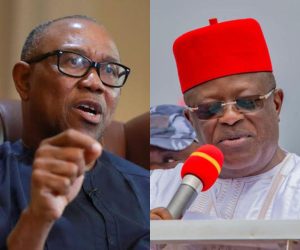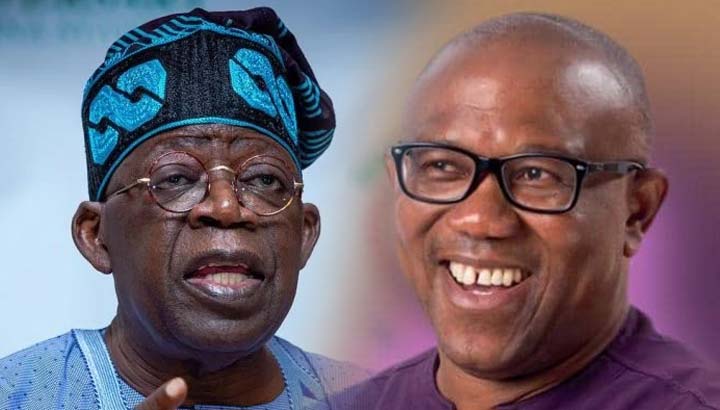
At Editors’ Conference in Enugu, Peter Obi urges tougher scrutiny of political leaders, while Tinubu’s aide defends economic reforms and calls for fair coverage of the government’s record.
ENUGU — The Presidency and the presidential candidate of the Nigerian Democratic Congress (NDC), Mr Peter Obi, have agreed that governance and accountability should feature prominently in the 2027 election campaigns, but differed over the emphasis of political debate.
The two sides made their positions known at the ongoing 22nd All Nigeria Editors Conference (ANEC) of the Nigerian Guild of Editors (NGE) in Enugu, where they also underscored the importance of an independent media, credible elections and the protection of Nigeria’s democratic institutions.
While Obi challenged Nigerian editors to subject political leaders to tougher scrutiny and demand answers on public spending and the delivery of essential services, the Senior Special Assistant to the President on Media and Special Duties, Chief Tunde Rahman, defended President Bola Tinubu’s economic reforms and argued that the administration should have an opportunity to present its achievements and make its case for re-election.
Both speakers called for a political environment in which public debate is informed by facts and voters are able to make decisions based on the records and proposals of those seeking political office.

Obi urges editors to reject political insults
Speaking at the conference, the former Anambra State governor called on editors to reject name-calling, propaganda and personality attacks, insisting that political campaigns should focus on policies and practical solutions to the challenges confronting Nigerians.
He urged journalists to hold politicians accountable whenever they avoid substantive questions or resort to personal attacks to divert public attention.
“If anybody steps out of bounds, we want you to name it,” Obi told the editors.
He maintained that Nigerians deserved clear explanations from political candidates about how they intended to address insecurity, unemployment, poor healthcare, inadequate education and other pressing national concerns.
Obi argued that the electorate was voting for individual candidates and their proposed policies, rather than their relatives or political associates.
“Come and explain because we are not voting for your wife. We are not voting for your children. We are not voting for your uncle or people representing you. We are voting for you,” he said.
The NDC presidential candidate also expressed his willingness to personally respond to allegations concerning his past, saying politicians should be prepared to face questions about their conduct.
“If there’s anything about me, please feel free. Call me and say, ‘Peter, people said you were a thief, or you stole when you were in secondary school, or you did not do this.’ I will explain it to you, and if it’s true, I will apologise,” he said.
He said the campaign conversation ahead of the 2027 elections should be driven by issues capable of improving governance, national unity, security and economic prosperity.
“Our discussion, our campaign, everything we do is strictly based on issues that will bring good governance, harmony, unity, security and prosperity for everyone,” Obi added.
Presidency defends Tinubu’s reforms
Responding to Obi’s call for tougher scrutiny, Rahman said the media must also give the government sufficient opportunity to explain its policies, achievements and plans for the country.
He argued that fair reporting required editors to give both the opposition and the government space to present their positions and answer questions from the public.
“If you allow the opposition to speak, as you have done with the NDC presidential candidate, Mr Peter Obi, the government too must speak,” Rahman said.
The presidential aide described the media and the ballot box as two critical pillars of Nigeria’s democracy, noting that the military’s return to the barracks had placed greater responsibility on voters and journalists to protect democratic governance.
“Democracy lives in three places: the ballot, the barracks and the newsroom. The soldiers have returned to the barracks. What is left is the ballot and the newsroom. If either fails, democracy fails,” he said.
Rahman said the ballot provided equal political power to Nigerians regardless of their wealth or social standing, adding that every vote should count in a credible electoral process.
“The ballot is the only thing that makes a market woman equal to a billionaire. For four hours on election day, they have the same power,” he said.
He urged political actors and government institutions to protect the integrity of elections by ensuring that electoral processes were transparent and that voters could exercise their rights freely.
AI-generated misinformation raises concerns
Rahman also highlighted the growing threat posed by artificial intelligence, fake news and deepfakes, warning that fabricated election results and manipulated media content could mislead voters.
He challenged editors to strengthen their verification processes and use their professional credibility to counter false information, particularly as political activities intensify ahead of the 2027 general elections.
“Anyone can sit on WhatsApp and announce a fake election result. Only you can debunk it with credibility,” he said.
He called on journalists to ensure that political reporting remained independent of party affiliations and that both government and opposition figures were held to the same standards of accountability.
“Let us punish lies with facts. Let us punish propaganda with professionalism. Let us not let clicks kill credibility,” Rahman said.
He added that the media should not become an appendage of any political party, but should remain committed to the interests of Nigeria and its citizens.
“The media should not be pro-APC or pro-LP or pro-PDP. It should be pro-Nigeria, pro-ballot, pro-people,” he said.
Rahman maintained that democracy could thrive if elections were free and the media reported fairly and professionally.
Obi questions public spending and service delivery
In his remarks, Obi challenged editors to go beyond political statements and examine Nigeria’s performance in comparison with other countries, particularly in the delivery of essential public services.
He urged journalists to investigate why healthcare, education and other basic services continued to pose major challenges in Nigeria, while similar services were functioning in other parts of the world.
“It is important that we also follow what other countries are doing. Ask questions about it,” he said.
Responding to questions from participants, Obi used healthcare infrastructure and public expenditure to illustrate the importance of evaluating government spending based on measurable results.
He argued that public officials should explain not only how much money had been allocated to projects but also what those funds had delivered and what alternative benefits could have been achieved with the same resources.
Using healthcare facilities as an example, he challenged editors to examine the cost of building and equipping functional health centres and compare that with the resources required to expand healthcare access across the country.
He said such scrutiny would help Nigerians understand the choices involved in public expenditure and determine whether government priorities were adequately addressing the needs of citizens.
Obi also criticised the state of infrastructure in educational institutions, using humour to highlight the difficulties faced by students pursuing advanced degrees in an environment where basic services, including electricity, remained unreliable.
He argued that prayer should not become a substitute for effective institutions and responsible governance, stressing that public officials must be held accountable for ensuring that essential services function properly.
The former governor said the country’s future would depend significantly on the decisions being made by political leaders today, particularly those affecting younger generations.
He therefore urged editors to scrutinize campaign promises and public spending, while ensuring that political candidates addressed the everyday concerns of Nigerians.
Tinubu’s aide highlights economic reforms
While Obi emphasized accountability and the need to assess public expenditure against the delivery of essential services, Rahman defended the Tinubu administration’s economic policies, arguing that difficult reforms had been necessary to stabilise the economy.
He said the government had taken major decisions aimed at improving economic conditions and that the benefits of the reforms were beginning to emerge.
“The President has done the hard part,” Rahman said.
The presidential aide cited the performance of the naira, economic growth, foreign reserves and inflation figures as indicators of progress under the administration.
He acknowledged that some of these indicators were macroeconomic measures but maintained that economic stability was a necessary foundation for improvements in the lives of ordinary Nigerians.
“You will say these are macroeconomics. But they matter. Without macroeconomic stability, you cannot even think of any impactful micro. Without a stable foundation, you cannot build the house,” he said.
Rahman said the administration was moving towards what he described as the “micro” phase of its reforms, in which the benefits of economic changes should increasingly become visible to households and businesses.
He also cited the Central Bank of Nigeria’s recent reduction in its benchmark interest rate as an indication of the direction of economic policy.
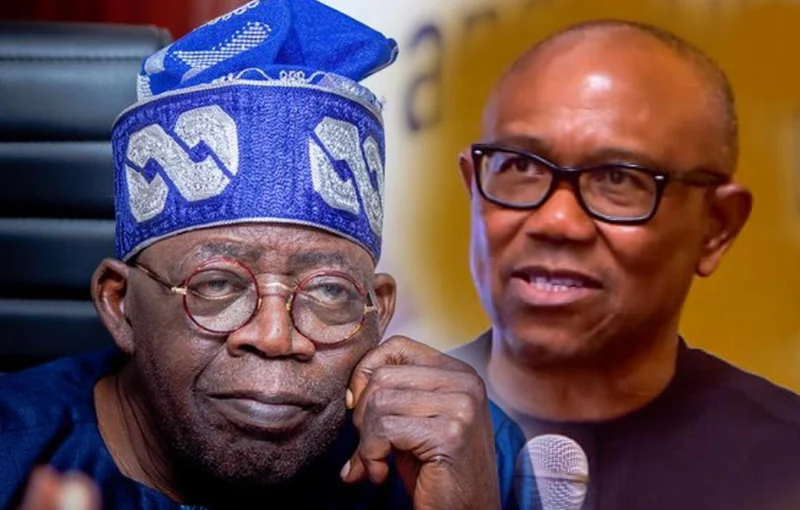
However, the two speakers presented different emphases on how the government’s performance should be assessed, with Obi focusing on the impact of public spending and essential services, while Rahman pointed to macroeconomic indicators and the administration’s reform programme.
Call for credible elections
Both speakers stressed the importance of a credible electoral process ahead of the 2027 general elections.
Obi called for free, fair and credible elections, arguing that Nigerians should be able to elect their leaders without intimidation or interference.
He urged the media to challenge political actors who resorted to insults and personal attacks rather than presenting their policies and addressing public concerns.
Rahman, meanwhile, said the responsibility for safeguarding democracy extended beyond political parties and electoral institutions to include the media and citizens.
He maintained that editors had a duty to provide accurate information, verify political claims and give voters the opportunity to make informed decisions.
The conference, which brought together editors and other stakeholders in Enugu, was held under the theme, “The Ballot, the Media and the Task of Keeping Democracy Alive,” with a sub-theme focusing on detecting and debunking AI-driven misinformation before, during and after elections.