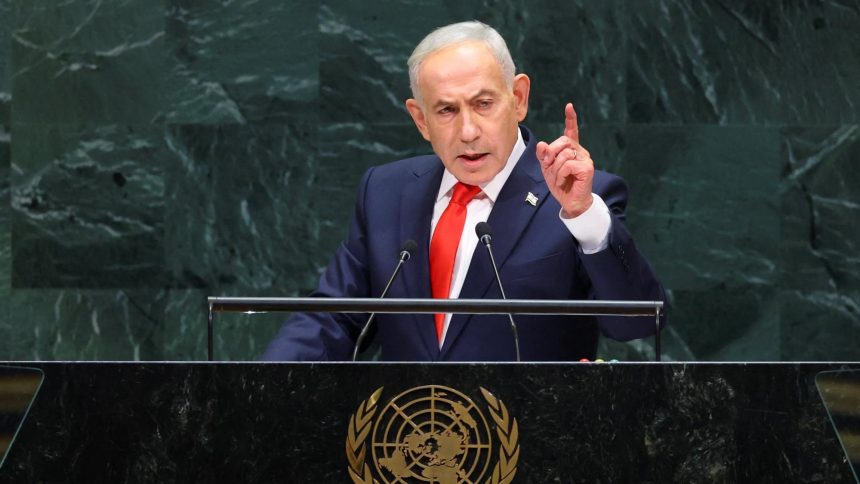
Israeli Prime Minister Benjamin Netanyahu has defended his country’s military operations in Iran, Gaza and other parts of the Middle East, vowing to continue fighting despite mounting international criticism and a mass walkout by delegates during his address to the United Nations General Assembly.
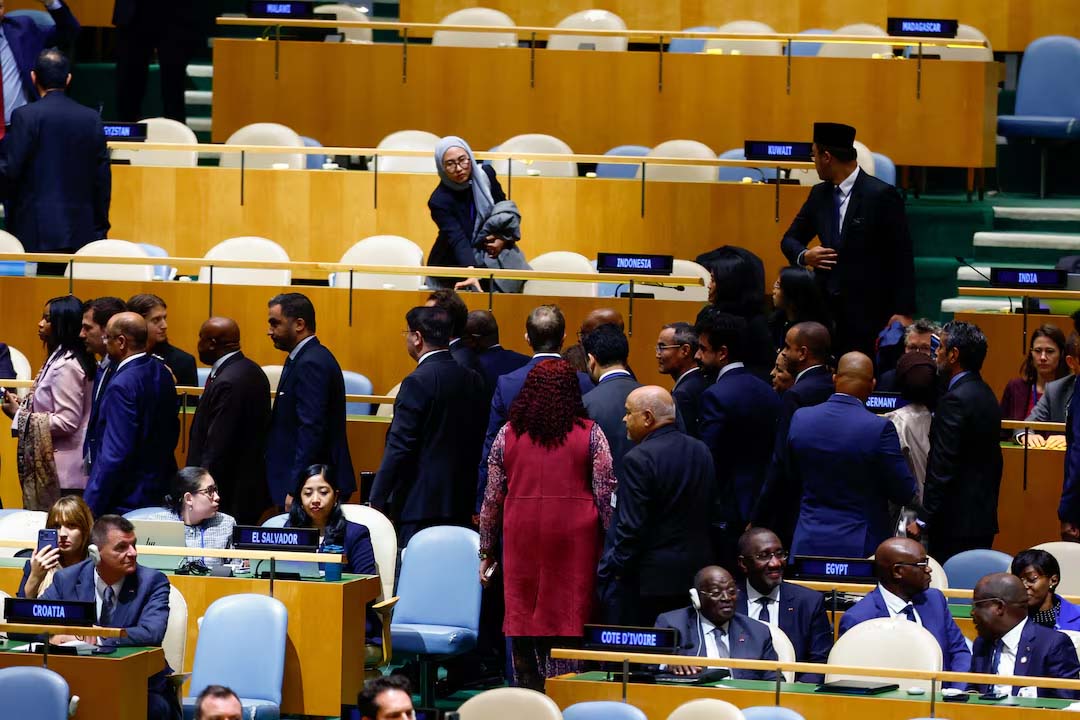
Netanyahu delivered the defiant speech amid protests from several delegations, with dozens of representatives leaving the assembly hall as he approached the podium.
Responding to the walkout, the Israeli leader declared that his country would not back down, insisting, “We’re going to win. We have no other choice.”
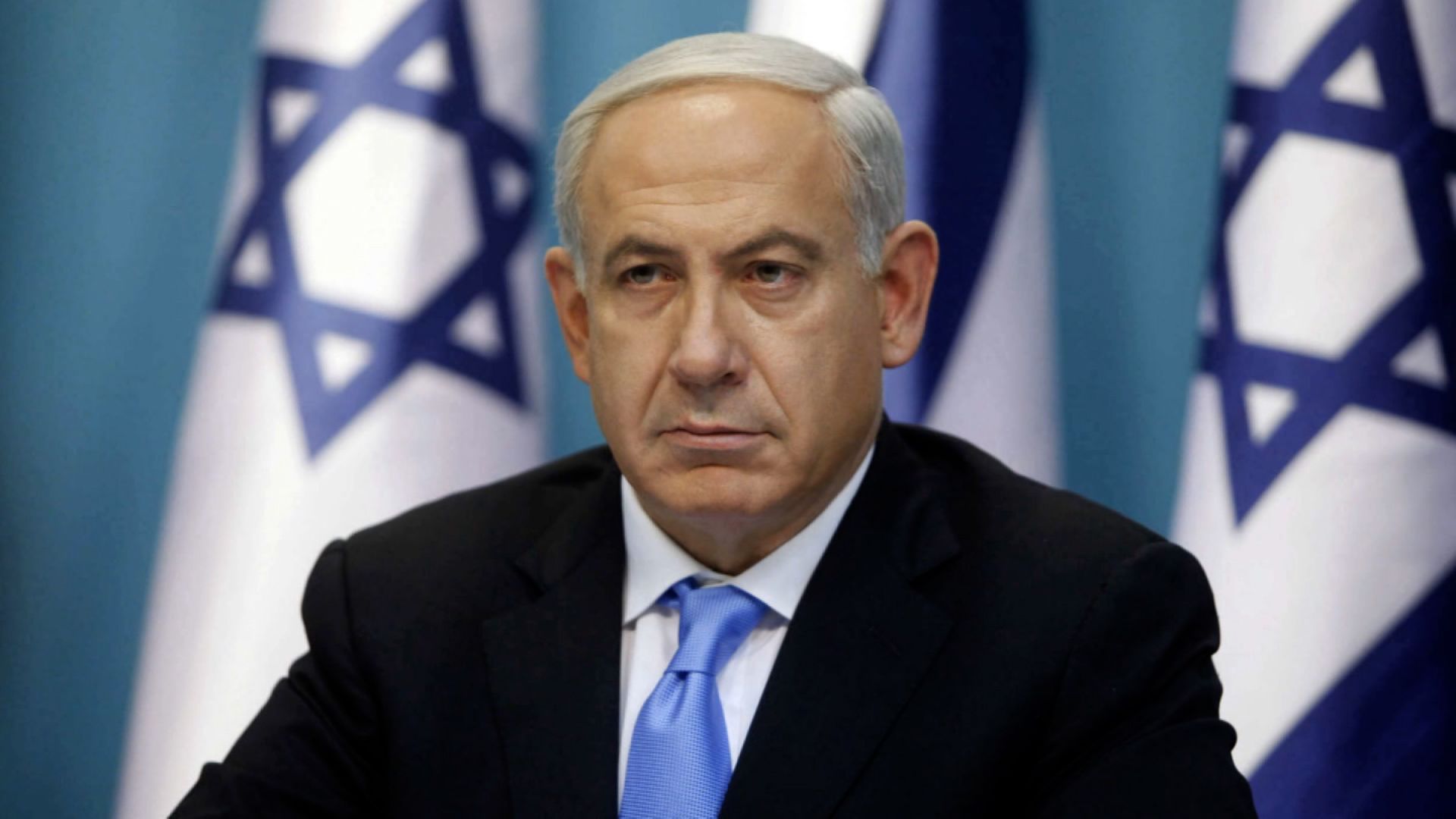
He also challenged delegates who remained in the chamber, saying, “If there are any other moral cowards who haven’t left the hall, please do so now.”
The speech, which included sharp criticism of countries and international leaders opposed to Israel’s military operations, came as Netanyahu faces growing diplomatic pressure over the conflict in Gaza and the wider regional confrontation involving Iran.
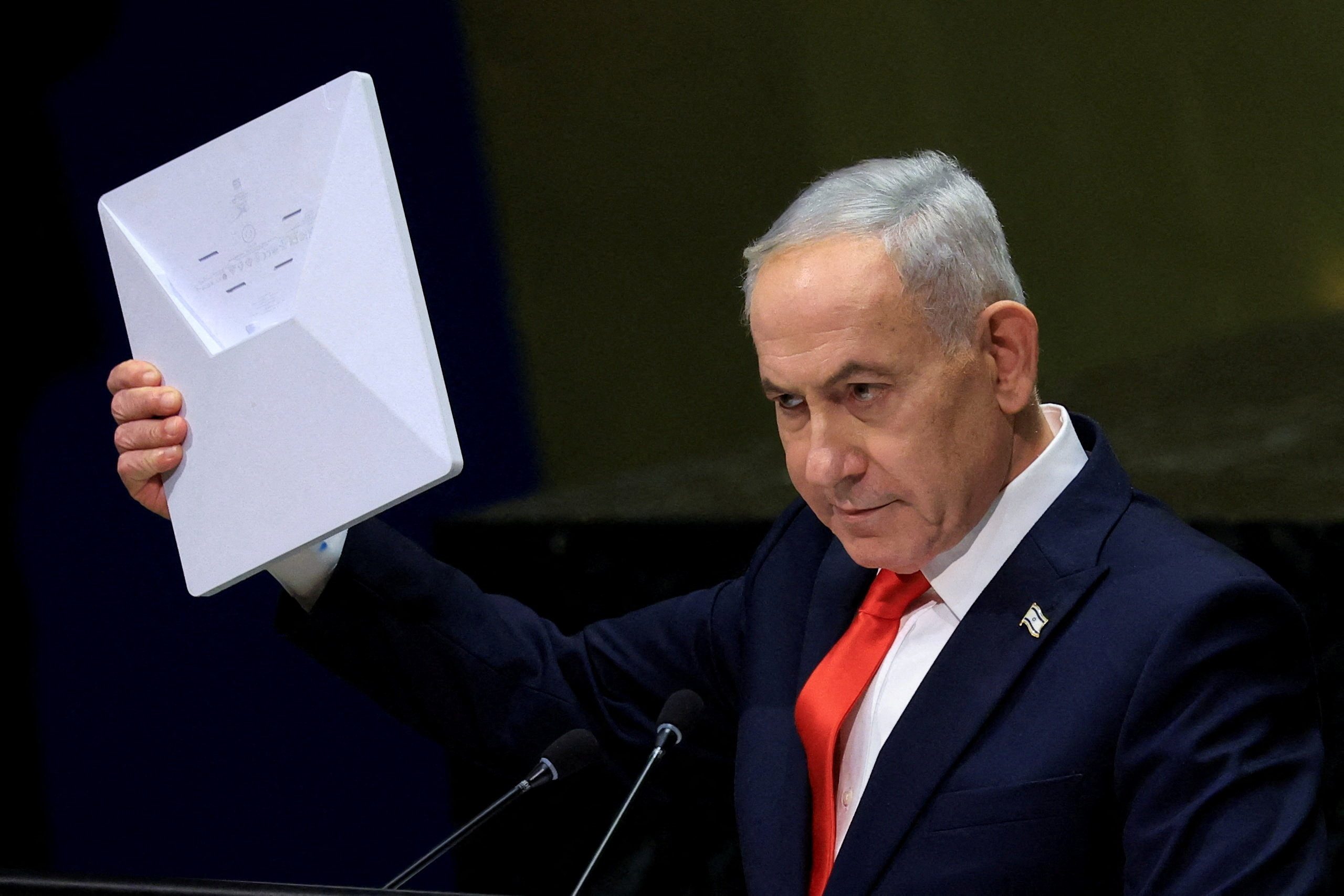
The Israeli prime minister also rejected allegations that his government was committing genocide against Palestinians in Gaza, maintaining that Israel’s military actions were justified.
Abbas Accuses Israel of Threatening Palestinian Existence
Hours before Netanyahu’s address, Palestinian President Mahmoud Abbas accused Israel of pursuing policies that threaten the future of the Palestinian people and undermine prospects for peace.
Speaking through a recorded video message, Abbas criticised the expansion of Israeli settlements in the occupied West Bank, describing the practice as illegal and warning that it threatened “the very life and existence of the Palestinian people on their homeland”.
Abbas was unable to attend the gathering in person after being denied a US entry visa.
He further accused Israel of subjecting Palestinians in Gaza to “killing, destruction, starvation and attempts at displacement, as well as a genocidal war”.
The Palestinian leader warned that Israel’s actions were jeopardising the internationally supported two-state solution, which envisages an independent Palestinian state existing alongside Israel.
The contrasting speeches highlighted the deep divisions between Israeli and Palestinian leadership over the conflict, its humanitarian consequences and the prospects for a negotiated settlement.
Netanyahu Attacks Critics, Calls Erdogan a Tyrant
During his address, Netanyahu launched a series of verbal attacks on governments and leaders who have criticised Israel’s military operations.
He took particular aim at Britain and France, challenging their criticism of Israel over allegations of colonialism.
“They accuse Israel, tiny Israel, of colonialism — some colonialism. And who’s accusing us? Among them are people in Britain and in France. For God’s sake, they invented the term,” he said.
Netanyahu also criticised Turkish President Recep Tayyip Erdogan, describing him as a “tyrant” and accusing him of supporting Hamas, the Palestinian armed group responsible for the October 7, 2023 attacks on Israel.
Erdogan had earlier addressed the UN General Assembly, condemning the treatment of Palestinians in Gaza and the occupied West Bank.
He said the injustices experienced by Palestinians “deeply offends the conscience of humanity”.
The remarks prompted a response from Burhanettin Duran, the Turkish presidency’s communications director, who accused Netanyahu of using the UN platform to make baseless allegations against Turkey and Erdogan.
According to Turkey’s state-run Anadolu news agency, Duran said the Israeli leader’s remarks were incompatible with the UN’s principles of peace, international law and dialogue.
Netanyahu also directed criticism at New York City Mayor Zohran Mamdani, who had previously pledged to arrest the Israeli prime minister but later acknowledged that he lacked the authority to do so.
“Since you were elected mayor of this city, many Jews no longer feel safe in New York,” Netanyahu said.
Mamdani’s office rejected the remarks, accusing Netanyahu of using his speech to repeat what it described as baseless lies intended to sanitise Israel’s actions against Palestinians.
Netanyahu Praises Trump, Defends Joint Strikes on Iran
The Israeli prime minister also praised US President Donald Trump, thanking him for what he described as bold leadership and highlighting the military cooperation between Washington and Jerusalem.
Netanyahu referred to the joint US-Israeli air strikes against Tehran in February, presenting the military action as necessary to protect both countries and broader international security.
“Israel and America acted together not only to protect ourselves, but to save civilisation,” he said.
Israel and the United States launched major air strikes against Iran on February 28, citing concerns over Tehran’s nuclear programme. Iran has denied seeking to develop nuclear weapons.
The strikes were followed by Iranian missile and drone attacks against Israel and neighbouring Gulf Arab states hosting US military installations, escalating tensions across the region.
Netanyahu’s praise for Trump also appeared to be directed at an American audience, as Israel faces increasing criticism in the United States over its military operations and the humanitarian situation in Gaza.
Election Campaign Looms as Netanyahu Faces Domestic Pressure
Netanyahu’s speech came at a politically sensitive time, with Israel preparing for a critical election next month.
Much of his address appeared aimed at two key audiences: Israeli voters, as he seeks to retain political power, and Americans, amid growing divisions over support for Israel.
The prime minister’s longstanding reputation as “Mr Security” has come under scrutiny following the Hamas-led attacks of October 7, 2023, which killed approximately 1,200 people in Israel and saw 251 others taken hostage.
Some of Netanyahu’s political opponents have questioned his suitability to remain in office, following Israeli media reports alleging that he failed to heed warnings about a possible Hamas attack. Netanyahu has firmly denied those reports.
His defiant performance at the UN is expected to feature prominently in his election campaign, particularly as his religious-right coalition faces challenges in opinion polls.
Netanyahu has sought to portray himself as the politician best equipped to defend Israel against international criticism and security threats.
However, his government is also confronting growing diplomatic isolation and increasing scepticism among sections of the American public.
Although Washington has continued supplying weapons to Israel, polling cited in the report suggests that support for Israel has declined among Democrats and that divisions have also emerged among Republicans, including some supporters of Trump’s MAGA movement.
Netanyahu’s praise for Trump and emphasis on joint military action against Iran appeared intended to reinforce his relationship with the US president and appeal to American voters who support the military partnership.
Susan Sarandon, Other Protesters Detained in New York
Meanwhile, several protesters opposing Netanyahu’s visit to New York were detained during demonstrations in the city.
Those detained reportedly included Oscar-winning actress Susan Sarandon, Emmy-winning actress Hannah Einbinder, Democratic congressional candidate Darializa Avila Chevalier and New York City Council member Chi Osse.
A spokesperson for the New York Police Department said officers responded to reports of an unscheduled demonstration in which protesters were blocking a junction.
The detentions came amid demonstrations against Israel’s military operations in Gaza and the prime minister’s appearance at the United Nations.
The protest also reflected growing public opposition to Israel’s military campaign and calls for accountability over civilian casualties and the humanitarian crisis in the Palestinian territory.
Gaza Death Toll Continues to Rise Amid Genocide Allegations
Israel launched its military campaign in Gaza following the October 7, 2023 Hamas attacks, which killed approximately 1,200 people in Israel and resulted in the abduction of 251 others.
According to Gaza’s Hamas-run health ministry, more than 73,920 Palestinians had been killed during the subsequent Israeli military campaign.
Israel has consistently rejected allegations that its military operations constitute genocide, arguing that its actions are necessary for national security and self-defence against Hamas.
However, the allegations have gained international attention. Last year, the International Association of Genocide Scholars adopted a resolution stating that Israel’s conduct in Gaza met the legal definition of genocide under the UN Genocide Convention.
The Israeli government has disputed such accusations, while the International Criminal Court has issued an arrest warrant for Netanyahu over alleged war crimes. The warrant does not constitute a conviction.
The conflicting positions of Israeli and Palestinian leaders at the UN have underscored the continuing diplomatic and legal disputes surrounding the war, as well as the challenges facing international efforts to secure a lasting ceasefire and revive negotiations towards a two-state settlement.
Netanyahu’s speech, marked by his rejection of international criticism and his pledge to continue military operations, comes as Israel confronts pressure over the war in Gaza, regional hostilities and the political implications of its increasingly contested international standing.