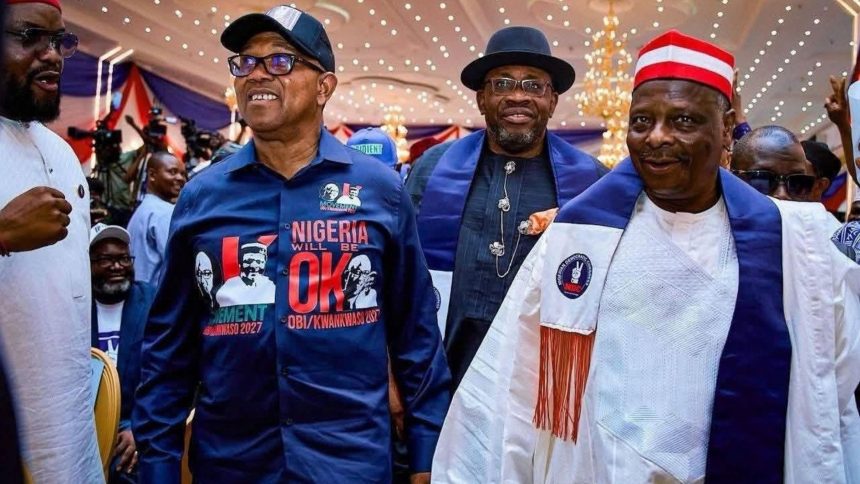
The Obi-Kwankwaso Movement, popularly known as the OK Movement, has rejected calls by the National Leader of the Nigeria Democratic Congress (NDC), Seriake Dickson, for support groups backing the party’s candidates to operate under the coordination of the political party.
The movement insisted that it is an independent political organization and that its collaboration with the NDC ahead of the 2027 presidential election does not amount to organizational subordination.
The position was contained in a statement issued by the Director-General of the OK Movement, John Ozyl Ughulu, in response to comments by Dickson that support groups should focus on grassroots mobilisation rather than establish structures that could compete with the party.
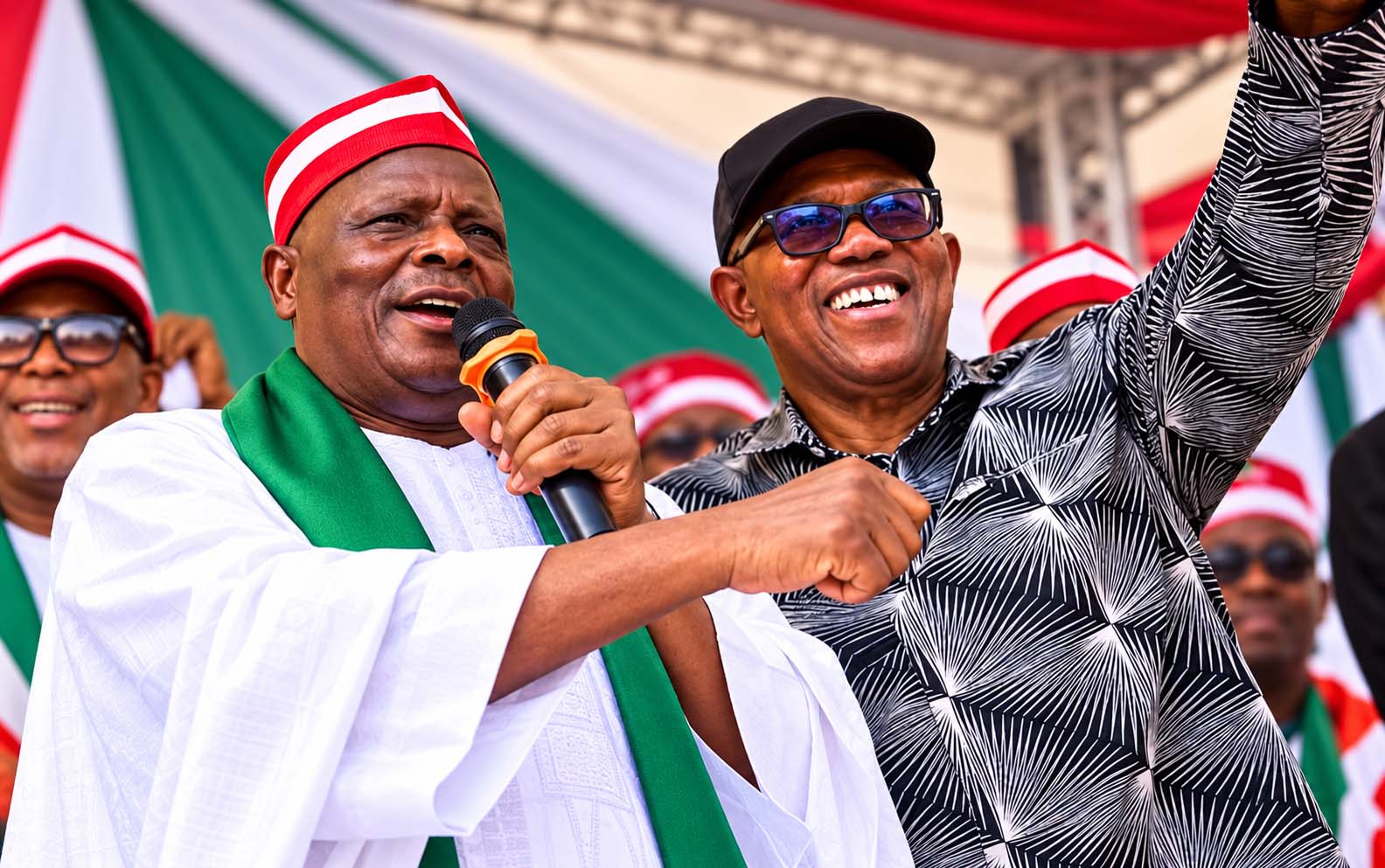
Dickson had argued that support groups should not compete with the political party sponsoring their candidates or seek supremacy over the party’s campaign structures.
“Support groups don’t compete with the political party that is sponsoring candidates. They don’t compete for supremacy or space. Support groups are what they are: support,” Dickson said.
However, Ughulu said the OK Movement was different from conventional support groups, stressing that it had developed its own structures and mechanisms across the country.
According to him, the movement is made up of individuals from different political parties who share political interests around Peter Obi and Rabiu Kwankwaso, the presidential and vice-presidential candidates of the NDC.
“For the avoidance of doubt, the OK Movement is an independent political organization. It is not a support group created as an appendage of any political party or another movement,” Ughulu stated.
He said the movement’s relationship with the NDC should be understood as political collaboration rather than organizational control.
“Our cooperation with the NDC Party should therefore be understood as political collaboration, not organizational subordination,” he said.
Ughulu also rejected Dickson’s criticism of the establishment of separate campaign structures by support organizations, arguing that political mobilization had evolved beyond traditional party structures.
He maintained that the OK Movement had the organizational right to establish its own campaign council and mobilization structures in support of its preferred candidates.
“The Movement has the legitimate organizational right to establish its own campaign structure and strategy,” he said.
The director-general stressed that the movement did not seek to usurp the constitutional powers of the NDC or claim supremacy over the party.
Rather, he said, the OK Movement wanted recognition of its right to choose candidates, mobilize voters and volunteers, campaign and coordinate its members through structures established by the movement itself.
Ughulu further warned against any attempt to merge, dissolve or absorb the movement’s structures into those of the NDC.
He said the OK Movement had established national, state, local government and ward structures through the efforts of thousands of members and coordinators across Nigeria.
“We did not build the OK Movement overnight. Its structures were established through the commitment, sacrifice and participation of thousands of members and coordinators across the country,” he said.
“No individual can simply declare that structure dissolved, transferred or absorbed without the authority of the Movement’s legitimate organs.”
Despite the disagreement, the OK Movement said it remained committed to working with the NDC and supporting the party’s presidential ticket in the 2027 election.
“The OK Movement respects the NDC and recognizes the constitutional authority of the party over its own internal affairs. Equally, the NDC and every other organization must recognize the independent identity, structure and legitimate interests of the OK Movement,” the statement said.
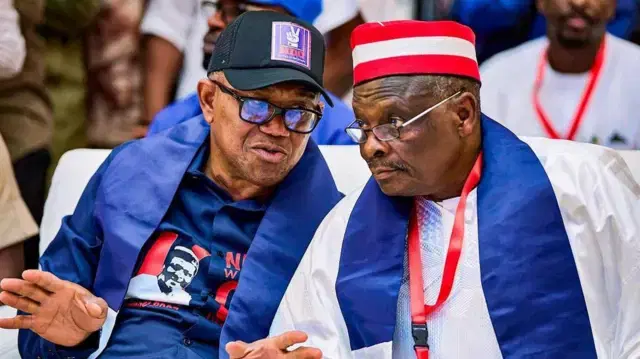
The movement also pledged to resolve any disagreements through lawful and democratic channels.
“We will not be intimidated. We will not surrender our identity. We will not abandon the structures we have built,” Ughulu said.
He added that the organization would continue to participate peacefully in the electoral process and support what it described as legitimate mandates given by Nigerian voters.