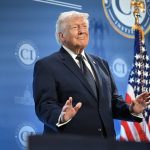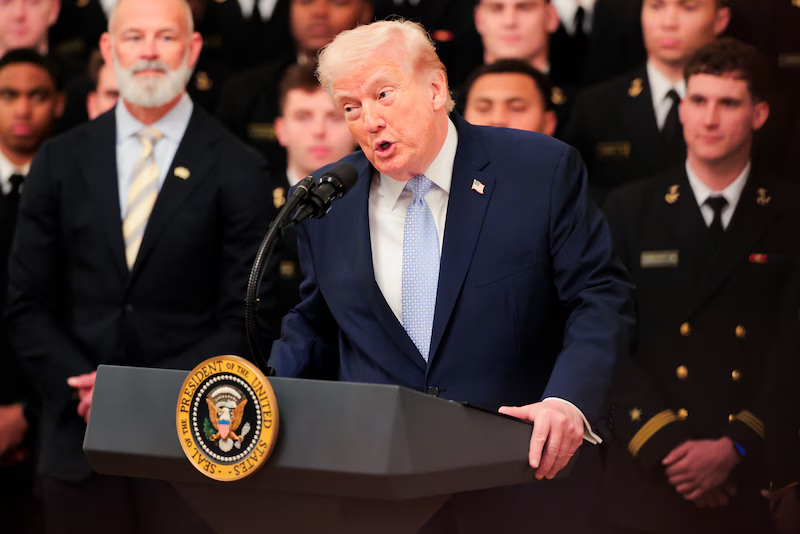
WASHINGTON, D.C. — US President Donald Trump has promised to give every adult American a $5,000 “dividend” if Republicans win control of both the House of Representatives and the Senate in November’s midterm elections.
Trump made the pledge while addressing the Republican Party’s first convention held during a US presidential term, but provided few details about how the payments would be funded or administered.
With nearly 270 million adults in the United States, a $5,000 payment to each eligible adult could cost the federal government approximately $1.3 trillion, raising immediate questions about the proposal’s financial and legal feasibility.
“If the Republicans win the House of Representatives and the United States Senate, both of them, I will issue a dividend to every adult citizen in the United States of America for $5,000,” Trump told supporters.
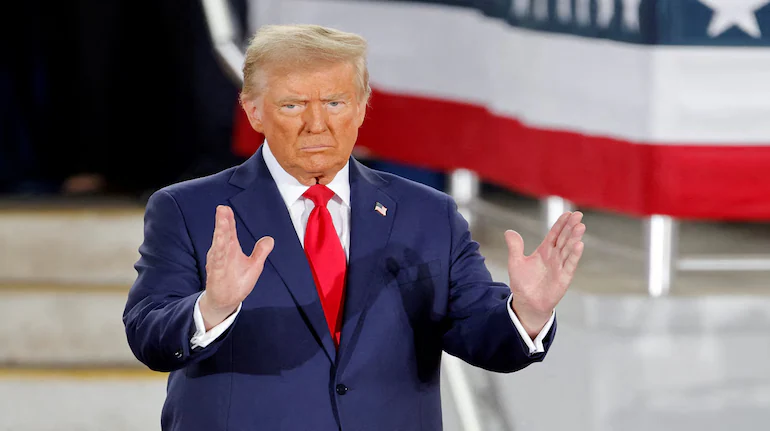
The president also insisted that recipients would have to spend the money within the United States, joking that he did not want Americans travelling to Canada, China or Germany to spend the funds.
However, it remains unclear how such a restriction would be enforced.
Democrats have dismissed the proposal as an “empty promise,” while legal experts have raised questions over whether offering direct financial benefits tied to an election outcome could violate federal laws designed to prevent attempts to influence voters.
Under the US system, Congress controls federal spending, and Trump did not explain whether he would seek congressional approval for the proposed payments, which he has branded “Trump Dividends.”
The proposal also comes amid growing economic pressure on American households, with energy prices fluctuating significantly following the conflict involving the United States, Israel and Iran and disruptions around the strategically important Strait of Hormuz.
The president has faced pressure from members of his own Republican Party over the economic impact of the conflict. Trump has warned supporters that the war could continue beyond the midterm elections and that oil prices may remain elevated during that period.
In his convention speech, Trump argued that the short-term economic difficulties were necessary to prevent Iran from developing nuclear weapons, while presenting the proposed $5,000 payments as a way of increasing Americans’ spending power.

The latest proposal is not the first time Trump has floated direct payments to Americans. He previously proposed $2,000 cheques that would be funded by revenue generated from tariffs.
American politicians have also made similar economic promises in previous elections. During the COVID-19 pandemic, for example, Democrats in Georgia proposed $2,000 relief payments if their party gained control of the US Senate.
Whether Trump’s proposed dividend can become reality will ultimately depend on congressional action, its funding mechanism and the legal framework surrounding the payments.