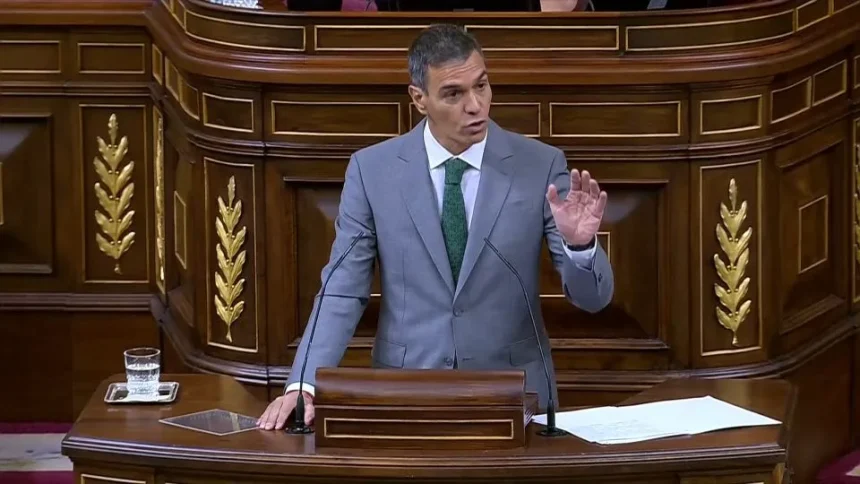
MADRID, Spain — Spanish Prime Minister Pedro Sánchez has defended his government’s handling of the migration crisis in the autonomous city of Ceuta, following a massive influx of migrants attempting to enter the Spanish territory.
Speaking during a one-hour interview with state television, Sánchez acknowledged that Spain must strengthen its preparedness to deal with what he described as potential “hybrid attacks,” particularly because Ceuta and neighbouring Melilla share borders with Africa.
The Prime Minister said the geographical position of the two autonomous cities gives them a “very, very important uniqueness,” requiring Spain to adopt stronger measures to anticipate and respond to sudden migration pressures.
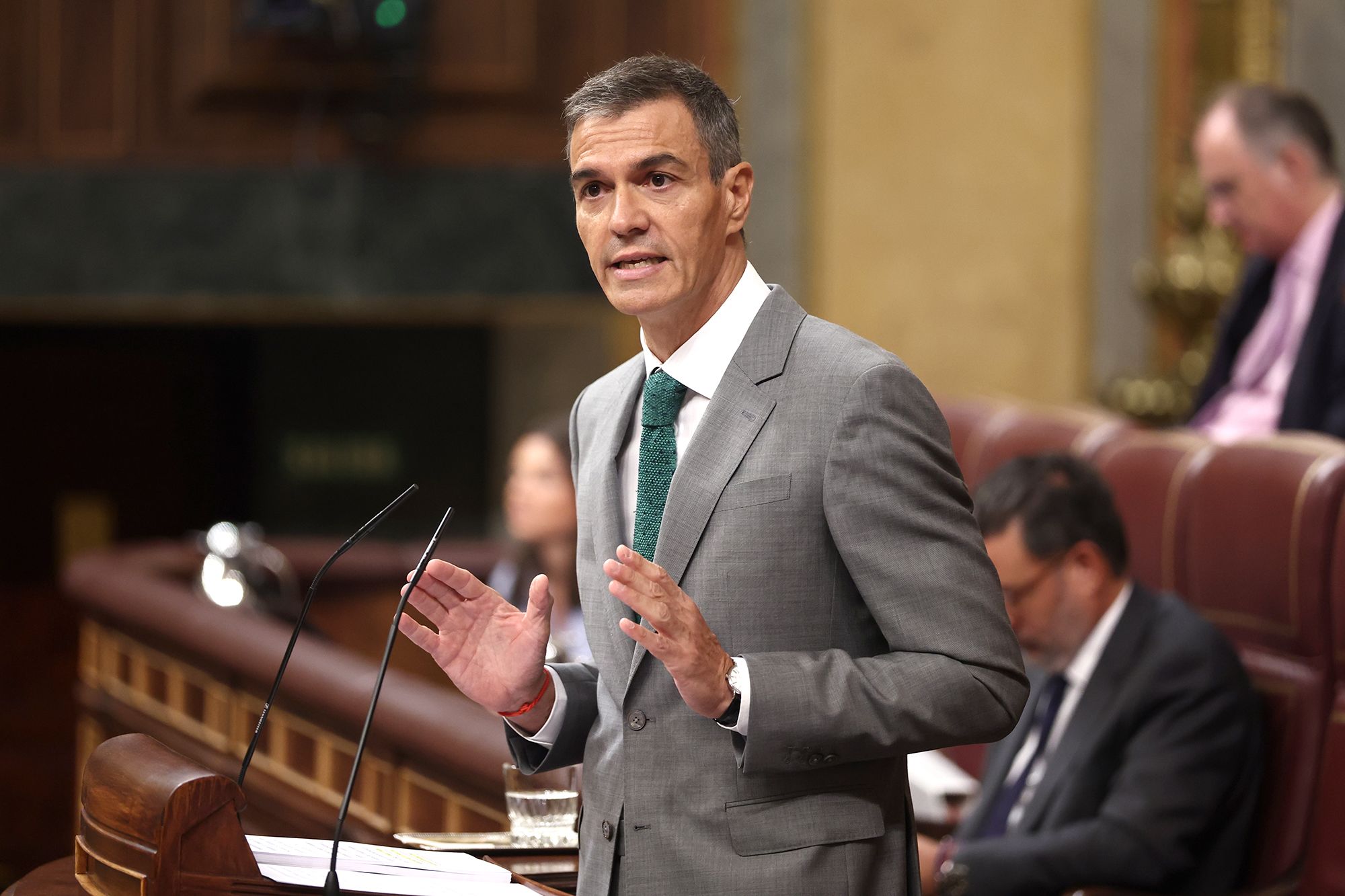
Sánchez is facing growing scrutiny over the humanitarian situation in Ceuta, where thousands of migrants have reportedly been left in difficult conditions after the unprecedented influx. The arrival of large numbers of people has also generated anger among some residents in the small Spanish territory, whose existing facilities have struggled to cope with the situation.
The Spanish leader said the government needs to expand its capacity to receive migrants, particularly by creating larger reception infrastructures capable of handling sudden increases in arrivals.
He also defended Spain’s intelligence services, saying they had faced difficulties in accurately predicting the scale of the influx. However, Sánchez acknowledged that forecasting the number of migrants likely to arrive is an area that needs improvement.
“We need to improve” the ability to anticipate such influxes, he said.
Meanwhile, Sánchez confirmed that King Felipe VI is expected to visit Ceuta, although he declined to give a specific date for the visit.
The humanitarian situation remains a major concern. For about a month, migrants have reportedly been staying in makeshift tents on a beach, with the Red Cross providing limited assistance, including roughly one meal a day.
The makeshift camp has also become a focal point for protests. Demonstrators have gathered for several weeks, demanding that the migrants be removed from Ceuta and accusing the Spanish Government of failing to properly manage the crisis.
The situation has placed renewed pressure on Sánchez’s administration to balance border security, humanitarian responsibilities and the concerns of Ceuta’s residents as Spain confronts one of its most serious migration challenges in the territory.